 Save
Save There's something about the smell of lemon zest hitting a warm mixing bowl that makes you want to bake immediately. My neighbor once leaned over the garden fence on a grey March afternoon, drawn purely by that citrus scent wafting from my kitchen window, and by the time she left she had a warm slice of this cake wrapped in foil. That's when I knew this lemon drizzle loaf had staying power—it bridges seasons, moods, and even fences.
I made this for my mum's book club once, and someone actually asked for the recipe before the cake was even finished cooling—that kind of compliment sticks with you. She described it as the loaf cake equivalent of a good conversation: bright, not too heavy, and something you find yourself coming back to for another slice.
Ingredients
- Unsalted butter, 200g softened: Room temperature is non-negotiable here; cold butter won't cream properly and you'll end up with a dense, disappointing cake.
- Caster sugar, 200g: The fine grains dissolve into the butter smoothly, creating that pale, fluffy base that promises a tender crumb.
- Large eggs, 3 at room temperature: Cold eggs seize up the batter; take yours out of the fridge while you prep everything else.
- Finely grated lemon zest, 1 tbsp from 2 lemons: This is where the real lemon flavor lives—squeeze the zest onto a microplane and watch how much brighter the batter becomes.
- Self-raising flour, 200g: Has the leavening built in, so you're getting guaranteed rise without fussing.
- Baking powder, 1/2 tsp: Just a tiny boost to ensure the cake rises evenly and stays tender.
- Salt, 1/4 tsp: Brings out the lemon flavor so it doesn't taste one-dimensional.
- Whole milk, 3 tbsp: Keeps the crumb moist without making it greasy; any temperature works fine here.
- Freshly squeezed lemon juice, 2 tbsp: Fresh juice makes a real difference; bottled tastes flat by comparison.
- Icing sugar, 80g for the drizzle: Creates a glaze that's just thick enough to cling to the cake but thin enough to seep down through those little holes.
- Freshly squeezed lemon juice, 3 tbsp for the drizzle: The same principle as above—fresh juice tastes alive, bottled tastes tired.
Tired of Takeout? 🥡
Get 10 meals you can make faster than delivery arrives. Seriously.
One email. No spam. Unsubscribe anytime.
Instructions
- Prepare your tin and heat the oven:
- Preheat to 180°C (350°F) and grease your 900g loaf tin thoroughly, then line it with baking parchment so the cake slides out cleanly. This step takes two minutes and saves you from the heartbreak of a stuck cake.
- Cream the butter and sugar:
- Beat them together for about three to four minutes until the mixture is pale, fluffy, and noticeably lighter in color—this incorporates air that helps the cake rise. You'll hear the mixer working harder as it gets lighter; that's your cue you're doing it right.
- Add the eggs one at a time:
- Add each egg, beating well between additions so they fully combine before the next one arrives. If the batter looks like it's splitting, don't panic; just add a spoonful of flour and keep mixing.
- Fold in the dry ingredients gently:
- Sift the flour, baking powder, and salt, then fold them in with a spatula using light strokes—you want to combine them without knocking out the air you just spent time creating. Overmixing leads to tough cake, so resist the urge to beat it.
- Mix in the lemon juice and zest:
- Stir the lemon zest into the creamed mixture before you add the dry ingredients, then fold in the milk and lemon juice at the end so everything stays moist and brightened. The batter should fall slowly from a spoon when you lift it.
- Pour and bake:
- Transfer the batter to your lined tin, smooth the top with a spatula, and slide it into the oven. Bake for forty-five to fifty minutes until a skewer inserted into the center comes out clean with no wet crumbs clinging to it.
- Make the drizzle while the cake bakes:
- Whisk the icing sugar and lemon juice together in a small bowl until it reaches a pourable consistency—thick enough to cling but thin enough to run. If it's too thick, add a teaspoon more lemon juice; too thin, add more icing sugar.
- Glaze the warm cake:
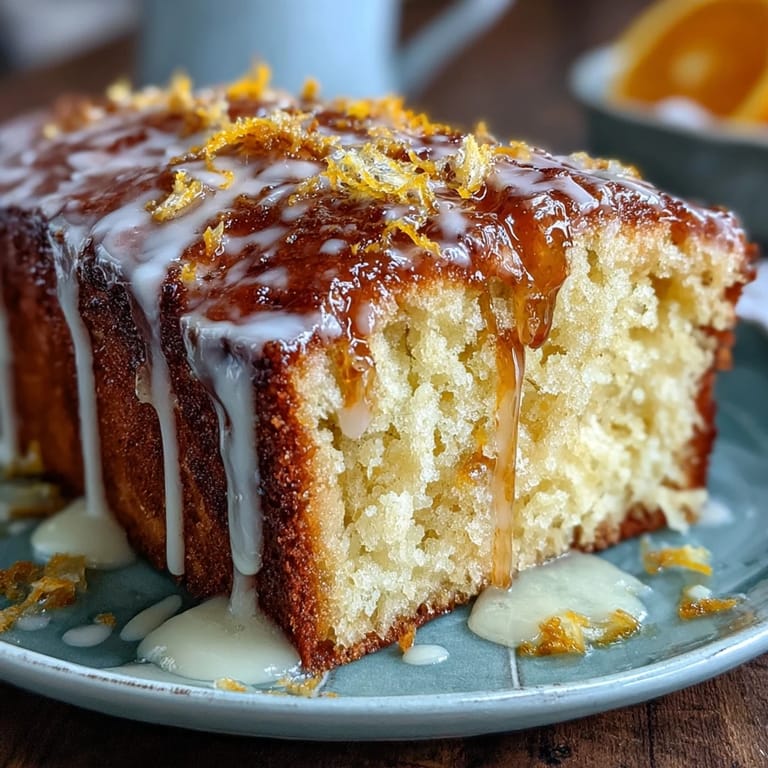
- Once the cake comes out of the oven, let it cool in the tin for exactly ten minutes, then use a skewer to poke holes all over the top while it's still warm. Slowly pour or drizzle the glaze over so it soaks into those holes and creates that signature tangy finish.
- Cool completely before serving:
- Leave it in the tin until completely cool, then turn it out onto a wire rack. This takes patience, but it ensures the glaze sets properly and the cake holds its shape.
 Save
Save I once made this cake on a rainy Tuesday when nothing seemed right, and somehow the act of grating lemon zest and creaming butter became meditative. By the time I pulled the golden loaf from the oven, the kitchen felt less like a problem to solve and more like a place where something good had just happened.
Why Fresh Lemon Matters
Bottled lemon juice tastes metallic and one-dimensional next to the brightness of fresh squeezed, and you'll notice the difference immediately once you've tasted both side by side. The zest contains all the essential oils that make this cake sing, so always zest before you juice and never use those plastic lemon-shaped bottles in a pinch—your cake deserves better.
Texture and Storage
This cake actually improves slightly on day two as the glaze fully sets and the crumb settles into an almost silky moistness that wasn't quite there when it was warm. Keep it wrapped in an airtight container at room temperature and it stays fresh for four days, though honestly it rarely lasts that long in my house.
Variations Worth Trying
The base recipe is forgiving enough that you can play with it once you've made it once or twice and know how it behaves. These small changes transform the same cake into something slightly different each time, so it never feels routine.
- Add a handful of poppy seeds to the batter for a subtle crunch that catches you between bites.
- Swap half the lemon juice in the glaze for limoncello if you're baking for adults only, and watch how the flavor deepens.
- Top a slice with fresh berries and whipped cream for something that feels fancy enough for guests but tastes like home.
 Save
Save This cake has become my emergency dessert, the one I know will turn out right even when I'm tired or distracted. It's simple enough to feel achievable but tasty enough that people genuinely enjoy eating it.
Recipe FAQ
- → What makes the loaf moist?
The combination of softened butter, eggs, and milk in the batter ensures a tender, moist crumb throughout the loaf.
- → How do I achieve the tangy lemon glaze?
By mixing icing sugar with freshly squeezed lemon juice to a pourable consistency, then pouring it over the warm loaf for a zesty finish.
- → Can I add extra texture to the loaf?
Yes, adding a handful of poppy seeds to the batter provides a subtle crunch and visual appeal.
- → What oven temperature is ideal for baking this loaf?
Preheat the oven to 180°C (350°F) and bake for 45–50 minutes until a skewer inserted comes out clean.
- → Are there any suggested accompaniments?
Serve slices with fresh berries or a dollop of whipped cream to complement the bright lemon flavor.
- → Can the lemon drizzle be modified for adults?
Substitute half the lemon juice in the drizzle with limoncello for a subtle, adult twist.