 Save
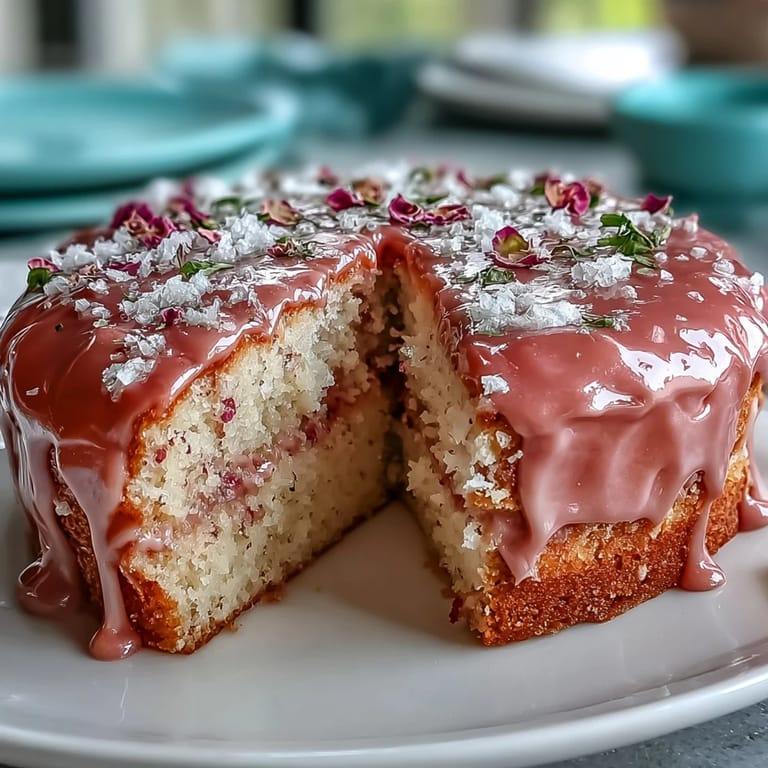
Save One of the most enchanting kitchen moments I can recall involved the gentle blush of rosé swirling into cake batter, filling the air with a deliciously floral aroma that hinted at something festive. It wasn’t even a special occasion—just a rainy afternoon when I wanted to experiment with flavors for my friend’s upcoming bridal shower. The burst of pink from gel food coloring made the batter look like a sunset in a bowl, and I couldn’t help but grin at the thought of slicing into something so pretty. My cat, who normally ignores my culinary adventures, circled my feet with curiosity, perhaps lured by the sweet notes drifting through the house. There’s a certain alchemy when cake-baking transforms an ordinary day into one brimming with celebration.
I vividly remember pulling the first gilded version of this cake from the fridge as laughter trickled in from a sunlit living room—everyone crowded in, admiring the shimmering gold edges. My best friend nearly squealed when she saw the pink velvet crumb and toasted with a glass of rosé, marveling at how even the dessert got its own moment. There’s nothing quite like the hush before the first slice at a shower—anticipation laced with little gasps. Even someone who swore they “don’t like cake” went back for seconds. Those glimmers of celebration made the effort more than worthwhile.
Ingredients
- All-purpose flour: Sift well for a cloudlike crumb—lumpy flour leads to heavy layers.
- Granulated sugar: Choose fine baking sugar for a delicate sweetness that doesn’t overpower the rosé notes.
- Baking soda: This reacts with vinegar for a subtle lift, keeping the cake extra tender.
- Fine salt: Just a small pinch balances all the floral and sweet flavors.
- Cocoa powder (unsweetened): Use a natural variety for depth without making the cake taste like chocolate.
- Vegetable oil: A neutral oil is key—olive oil competes with the wine’s perfume.
- Eggs (room temperature): Letting them warm up ensures a smoother, more unified batter.
- Buttermilk (room temperature): This adds gentle tanginess and moisture—don’t skip it.
- Rosé wine: Pick your favorite dry or sparkling; taste before adding, as a sweeter wine can make the cake cloying.
- Vanilla extract: Pure vanilla deepens the floral notes of the rosé.
- White vinegar: You may question this, but it’s colorless and transformative—don’t worry, the taste disappears.
- Pink or rose gel food coloring: Just a dab creates that dreamlike blush—avoid liquid, which can water down the batter.
- Unsalted butter (room temperature): For the silkiest, fluffiest buttercream, let it truly soften first.
- Powdered sugar (sifted): Sift to avoid pesky lumps in your buttercream.
- Heavy cream: This ensures the white chocolate drip is glossy and easy to pour.
- White chocolate chips: Choose high-quality—some cheaper ones won’t melt smoothly.
- Edible gold luster dust: Be sure it’s food safe, not just “for decoration.”
- Vodka or clear lemon extract: Alcohol evaporates quickly so you get shine but no taste left behind.
- Extra edible gold accents, rose petals, berries: Optional, but take things from beautiful to unforgettable.
Tired of Takeout? 🥡
Get 10 meals you can make faster than delivery arrives. Seriously.
One email. No spam. Unsubscribe anytime.
Instructions
- Prep and preheat:
- Crank your oven to 350F (175C) and take a moment to line three 8 inch pans with parchment—no stick disasters today.
- Mix the dry base:
- Sift flour, sugar, baking soda, salt, and cocoa into a big bowl; you’ll see tiny puffs of cocoa dust—no clumps in sight.
- Blend the wet magic:
- In another bowl, whisk oil, eggs, buttermilk, rosé, vanilla, and vinegar until smooth and a little glossy.
- Combine and color:
- Add wet to dry and stir just until blended. Swirl in the gel coloring and watch the batter turn a whimsical pink.
- Divide and bake:
- Portion the batter evenly among pans—eyeball or weigh for precision—and slide into the oven. Bake 30 to 35 minutes, relishing the floral cakey aroma.
- Cool completely:
- Let cakes rest 10 minutes, then flip onto racks. Wait until they’re truly cool—patience is key for a neat finish.
- Make the rosé buttercream:
- Beat butter until fluffy, then gradually add powdered sugar. Stream in rosé, vanilla, and salt, beating until the frosting is pale and whipped—taste test mandatory.
- Assemble and crumb coat:
- Level layers if needed, stacking with buttercream between each. Spread a thin crumb coat over the whole cake and chill for 20 minutes before the final, dreamy pink finish.
- White chocolate gold drip:
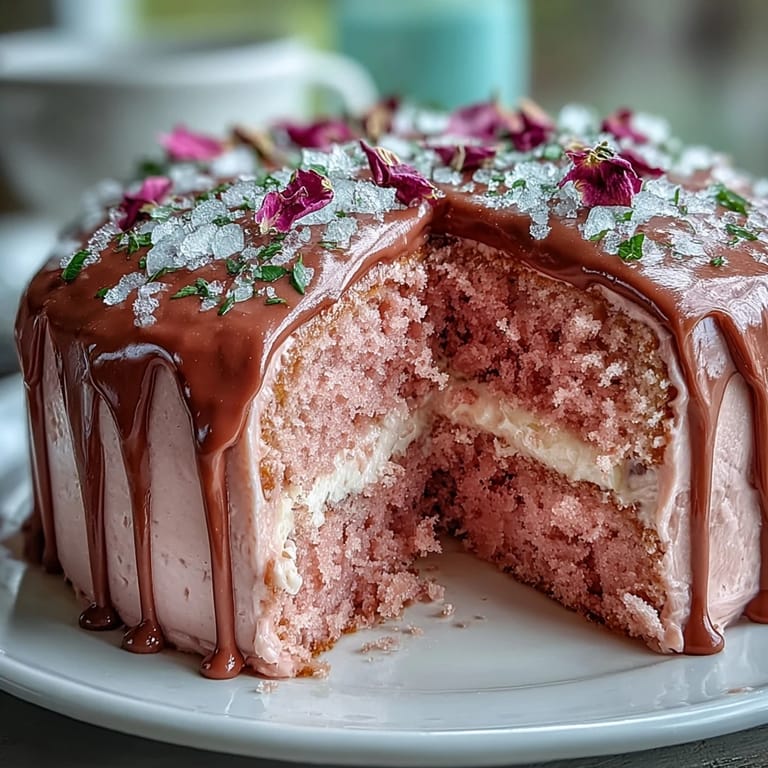
- Melt white chocolate chips with cream until glossy. Let cool a bit, then pour gently along the cake’s edges so it drips down—set with a little fridge time.
- Paint the gold:
- Mix edible gold luster dust with vodka or lemon extract to create a paint. Use a small brush to transform the drips into shimmering gold, adding final edible petals or berries if you like.
 Save
Save 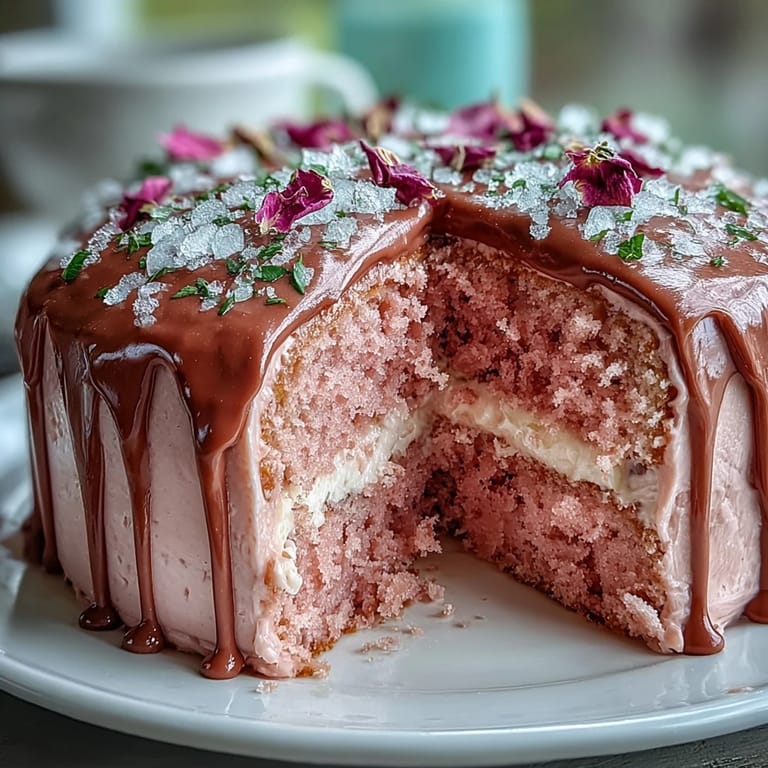 Save
Save There was a moment, just as we lit some soft string lights in the kitchen, when someone held up their plate and admired how the gold shimmer caught the light—the cake became the centerpiece for more than just its stunning look. In that glow, slicing into the cake turned into a hush of anticipation and a flurry of cameras, the dessert briefly upstaging the gifts themselves.
How To Nail The Perfect Pink Crumb
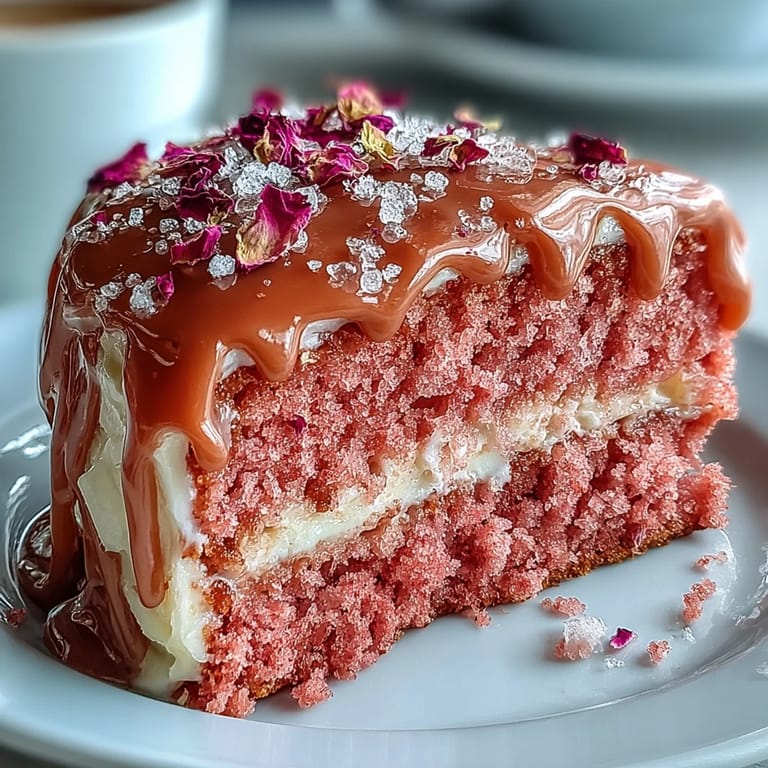
Getting your cake that just right rosy color feels almost like mixing potions—add your gel coloring gradually and stop when the batter is a little more vivid than you want, as it fades a touch while baking. Never use liquid food coloring, or you’ll risk a pale or uneven hue and a sad, heavy cake.
Choosing The Right Rosé For Baking
A drier rosé keeps things floral but not too sweet—avoid desserts that taste more like candy than elegant cake. If you taste it and love it in your glass, you’ll probably love it in your batter (and icing too).
Decorating With Gold Without The Stress
Mixing the edible gold luster with vodka means it dries fast and delivers an electrifying metallic finish. Always check the label on your luster dust—edible gold is safe, while some glittery decorations aren’t for consumption.
- Paint only once the chocolate drip is cool to the touch.
- Use a very fine brush for neat shimmering edges.
- Don’t rush the decoration—let yourself enjoy the transformation.
 Save
Save 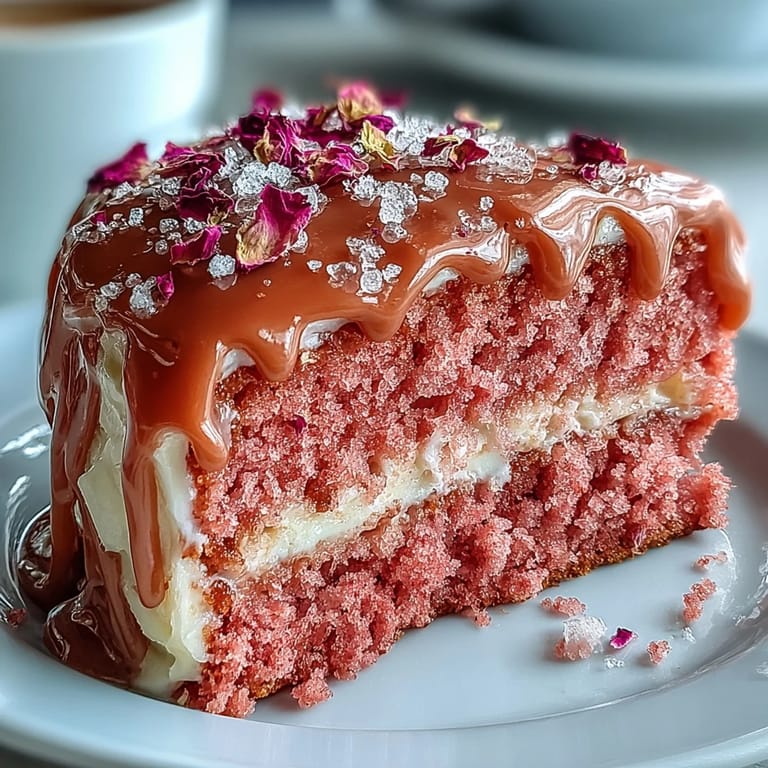 Save
Save May your celebrations always be as joyful and sparkly as this cake—and may every slice serve up a little extra magic. Here’s to sharing sweets that start conversations and create memories long after the last crumb.
Recipe FAQ
- → Can I use sparkling rosé or still rosé?
Either works. A dry still rosé adds subtle fruit and floral notes; a sparkling rosé brings a lighter aroma. Reduce liquid slightly if the wine is very effervescent to maintain batter consistency.
- → How do I prevent a runny buttercream?
Beat butter until very light, then add powdered sugar gradually. Chill the crumb-coated cake for 20 minutes before final icing. If buttercream loosens, add more powdered sugar or chill briefly to firm texture.
- → What’s the best way to make the gold drip safe and shiny?
Melt white chocolate with cream and cool until just pourable. For shimmer, mix edible gold luster dust with a food-safe clear alcohol or clear extract to make paint and brush onto set drips. Always use edible-grade luster dust.
- → How do I get an even drip effect?
Chill the cake so the buttercream is firm. Pour the slightly cooled ganache around the edge, using a spoon or squeeze bottle to control drops. Test drips on a chilled plate to dial in timing and flow.
- → Can I prepare this ahead of time and store it?
Yes. Assemble and chill overnight in the refrigerator. Bring the cake to room temperature before serving to let flavors open and buttercream soften slightly.
- → Any tips for layering and leveling the cake?
Level each cooled layer with a serrated knife or cake leveler for even stacking. Apply a thin crumb coat, chill to set, then finish with a smooth outer layer before adding the drip.