 Save
Save Last spring, a friend brought a jar of dandelion honey to a potluck, and I found myself staring at it for weeks—uncertain what to do with something so delicate and floral. One quiet afternoon, the idea of baking it into a cake struck me, and I decided to pair it with bright lemon to let both flavors breathe. The result was a tender, moist cake that somehow tasted like walking through a meadow in May, and it's been my go-to ever since for moments when I want something elegant but unpretentious.
I made this cake for my grandmother's tea party last April, and watching her close her eyes after the first bite told me everything. She said it tasted like spring itself, which might sound dramatic, but that's when I knew this recipe had something real worth preserving.
Ingredients
- All-purpose flour (2 cups): The foundation that keeps the crumb tender—don't sift it unless you're trying to make the cake denser.
- Baking powder and baking soda (1 1/2 tsp and 1/2 tsp): The combination lifts the cake gently without over-aerating it; they work together like a quiet team.
- Fine sea salt (1/2 tsp): This enhances both the honey and lemon flavors, making them sing rather than whisper.
- Unsalted butter (1/2 cup): Room temperature is non-negotiable here—cold butter won't cream properly and you'll lose that airy texture.
- Dandelion honey (1/2 cup): If you can't find it, regular honey works, but dandelion has a faint herbaceous quality that regular honey doesn't quite capture.
- Granulated sugar (1/2 cup): This balances the honey's depth and ensures the cake rises evenly.
- Eggs (3 large): Room temperature eggs emulsify better with the butter and honey, creating a smoother, more stable batter.
- Pure vanilla extract (1 tsp): Real vanilla adds warmth that complements both honey and lemon beautifully.
- Whole milk (1/2 cup): Room temperature milk incorporates smoothly and keeps the cake tender and moist.
- Lemon zest and juice (2 tbsp each): The zest carries more flavor than juice alone, so don't skip it—this is where brightness lives.
- Powdered sugar (1 cup): Sift it or press it through a fine sieve to avoid lumpy glaze.
Tired of Takeout? 🥡
Get 10 meals you can make faster than delivery arrives. Seriously.
One email. No spam. Unsubscribe anytime.
Instructions
- Set your stage:
- Preheat the oven to 350°F and prep your 9-inch pan with butter and flour or parchment paper. Room temperature ingredients are your secret weapon here—take the eggs, butter, and milk out 30 minutes before you start.
- Build the dry foundation:
- Whisk the flour, baking powder, baking soda, and salt together in a medium bowl. This distributes the leavening evenly so you won't get sudden rises that crack the top.
- Cream the butter base:
- Beat the butter, dandelion honey, and sugar together until the mixture is pale, fluffy, and looks almost like soft clouds. This takes about 3 minutes with an electric mixer, and you'll notice the texture change happen right before your eyes.
- Introduce the eggs gently:
- Add the eggs one at a time, beating well after each one—this slow approach emulsifies the mixture and keeps it smooth rather than curdled or greasy. Then stir in the vanilla, lemon zest, and lemon juice.
- Alternate and combine:
- Add the dry mixture in three parts, alternating with the milk and starting and ending with flour. Mix just until combined—overmixing develops gluten and makes the cake tough, which defeats the entire purpose.
- Bake with patience:
- Pour the batter into the pan, smooth the top gently, and bake for 35 to 40 minutes until a toothpick comes out clean. The kitchen will smell so good you'll wonder if you should skip eating and just breathe.
- Cool it down:
- Let the cake rest in the pan for 10 minutes—this prevents it from breaking apart—then turn it out onto a wire rack and let it cool completely before glazing.
- Make the glaze shine:
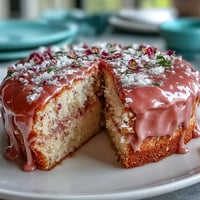
- Whisk the powdered sugar, lemon juice, and dandelion honey together until smooth, adding lemon juice gradually so you control the consistency. You want it thick enough to coat but thin enough to drizzle.
- Finish with finesse:
- Drizzle the glaze over the cooled cake and let it set for 10 to 15 minutes before slicing—this gives the glaze time to firm up slightly without becoming hard.
 Save
Save My neighbor tasted a slice and immediately asked for the recipe, which felt like the highest compliment. That moment reminded me that simple, honest flavors often move people more than complicated techniques ever could.
Why Dandelion Honey Matters
Dandelion honey has a subtle, almost grassy sweetness that regular clover or wildflower honey doesn't quite match. It's delicate enough that it doesn't overpower the lemon, but present enough that you know it's there. If you can't find it at a farmers market or specialty store, don't panic—regular honey works perfectly fine, though the cake will taste slightly more traditional and less mysterious.
The Lemon Glaze Relationship
The glaze is where brightness happens, and it's important not to rush it. I learned this by making the glaze too thin once and watching it slide right off the cake like water. The consistency should coat the back of a spoon but still flow slightly when you pour it—that sweet spot takes just a little attention.
Storage and Serving Secrets
This cake actually tastes better the next day because the flavors settle and deepen, which is a rare gift in the baking world. It keeps beautifully in an airtight container at room temperature for three days, and it also freezes well for up to a month if you want to wrap it tightly and save it for later.
- Serve it at room temperature with herbal tea or a light floral white wine for an elegant pairing that feels unhurried.
- If you want more dandelion flavor, add 2 tablespoons of finely chopped unsprayed dandelion petals directly to the batter before baking.
- Always check your honey and dairy labels if anyone at your table has allergies—this cake contains wheat, milk, and eggs.
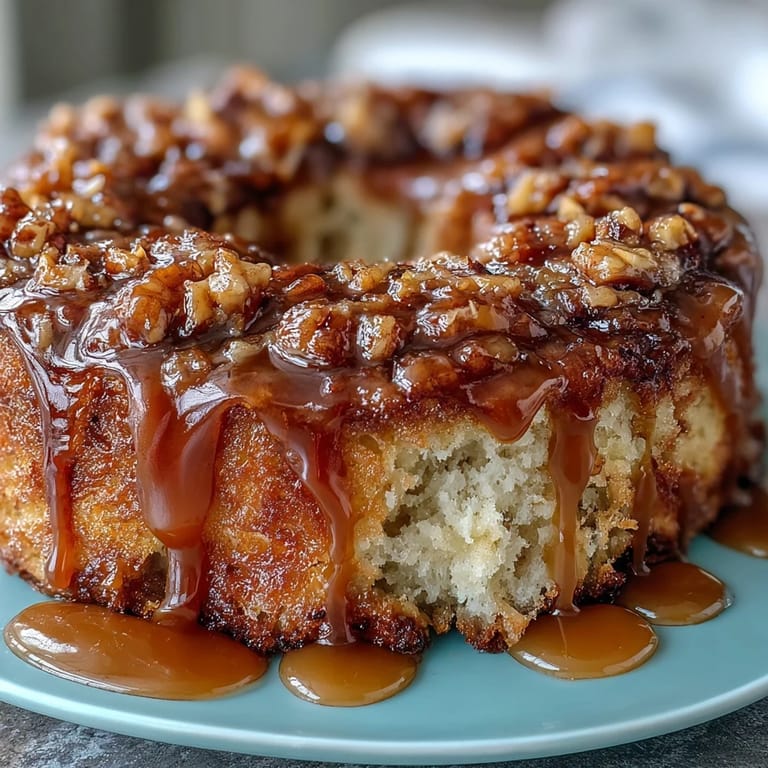 Save
Save This cake has become my answer to those moments when you want to make something special without pretending to be a fancy baker. It's the kind of recipe that feels like a small gift to everyone who tastes it.
Recipe FAQ
- → What does dandelion honey add to the cake?
Dandelion honey offers a delicate floral sweetness and subtle herbal notes, enriching the cake’s flavor and aroma.
- → How is the lemon glaze prepared?
The glaze is made by whisking powdered sugar with freshly squeezed lemon juice and dandelion honey until smooth, then drizzled over the cooled cake.
- → Can I substitute regular honey for dandelion honey?
Yes, regular honey can be used as a substitute, though it will slightly alter the floral flavor character.
- → What baking tools are needed for this cake?
A 9-inch round pan, mixing bowls, an electric mixer or whisk, measuring utensils, a zester, and a wire rack are essential.
- → How should leftovers be stored?
Store cake in an airtight container at room temperature to maintain moisture and freshness for up to three days.
- → Is this cake suitable for vegetarians?
Yes, this cake is vegetarian-friendly, containing no meat products and made with dairy and eggs.