 Save
Save There's something about the smell of lentils simmering with cumin and smoked paprika that stops me mid-afternoon, no matter what else I'm doing. Years ago, a friend brought this stew to a potluck on a gray October evening, and I watched people go back for thirds, spooning it over bread like it held secrets. I finally asked for the recipe, made it that same week, and discovered that the best comfort food doesn't require any fuss or fancy techniques—just good vegetables, patient simmering, and the kind of warmth that fills a kitchen and lingers in your bones.
I made this for my partner on a Tuesday when we were both too tired to think about dinner, and somehow it became the dish we request when life feels chaotic. Now when I catch the smell of that paprika hitting hot oil, I'm already mentally setting the table and pouring glasses of something cold. There's real magic in how something so simple can become a touchstone in your cooking life.
Ingredients
- Brown or green lentils (1½ cups, rinsed): The backbone of this stew—they hold their shape beautifully and bring an earthy depth that keeps everything grounded.
- Vegetable broth (4 cups): Quality matters here because it becomes the soul of the stew; I always taste mine before committing since broths vary wildly in saltiness.
- Olive oil (2 tablespoons): This is your foundation for building flavor, so don't skip it or rush the initial sauté.
- Onion, carrots, celery (1 of each, cut into pieces): The holy trinity of vegetable aromatics—this combination is non-negotiable if you want that rounded, classic flavor.
- Red bell pepper (1, diced): Adds brightness and a subtle sweetness that balances the earthiness of the lentils.
- Garlic (3 cloves, minced): Bloom it in the oil for just one minute so it releases its perfume without turning bitter.
- Potato (1 medium, cubed): Creates a creamy texture as it breaks down slightly, thickening the stew naturally.
- Canned diced tomatoes (1 can, 400g with juice): Don't drain these—that juice adds acidity and helps everything taste brighter.
- Spinach or kale (2 cups, chopped): Stir this in at the end so it wilts gently without turning to mush.
- Cumin (1 teaspoon): Brings warmth and an almost smoky undertone that makes people ask what your secret ingredient is.
- Smoked paprika (1 teaspoon): This is the flavor hero—it adds depth without heat, just pure, honest smoke.
- Dried thyme (½ teaspoon): Works in the background to tie all the savory notes together.
- Bay leaf (1): Remove it after cooking or you'll get an unpleasant texture surprise mid-spoonful.
- Salt and black pepper: Taste as you go—the broth and tomatoes already contain salt, so season gently.
Tired of Takeout? 🥡
Get 10 meals you can make faster than delivery arrives. Seriously.
One email. No spam. Unsubscribe anytime.
Instructions
- Sauté the aromatics:
- Pour olive oil into a large pot and let it shimmer over medium heat, then add onion, carrots, celery, and bell pepper. Watch them soften and release their fragrance over about 5–7 minutes—you want them tender but not mushy, that sweet spot where they start to turn translucent at the edges.
- Wake up the garlic:
- Stir in your minced garlic and listen for that little sizzle, then count to 60 slowly—this brief moment transforms raw garlic into something mellow and sweet.
- Build the stew:
- Add potatoes, rinsed lentils, tomatoes with all their juice, cumin, paprika, thyme, and bay leaf, then pour in the vegetable broth. Stir everything together and watch the colors deepen as the spices bloom in the liquid—this is when you know you're on the right path.
- Let it simmer gently:
- Bring the pot to a boil, then immediately lower the heat, cover it, and let it bubble gently for 30–35 minutes, giving it a stir every 10 minutes or so. You're looking for lentils that are tender enough to break easily with a spoon but not so soft they've surrendered into mush.
- Add the greens:
- Remove the bay leaf carefully (seriously, don't let it stay in there), then stir in your spinach or kale and cook just until it wilts down, about 2–3 minutes. It should remain vibrant green, not gray and sad.
- Taste and adjust:
- This is crucial—taste a spoonful and decide what it needs. More salt, a crack of pepper, maybe a splash of water if it's too thick? Trust your instincts here.
- Serve with intention:
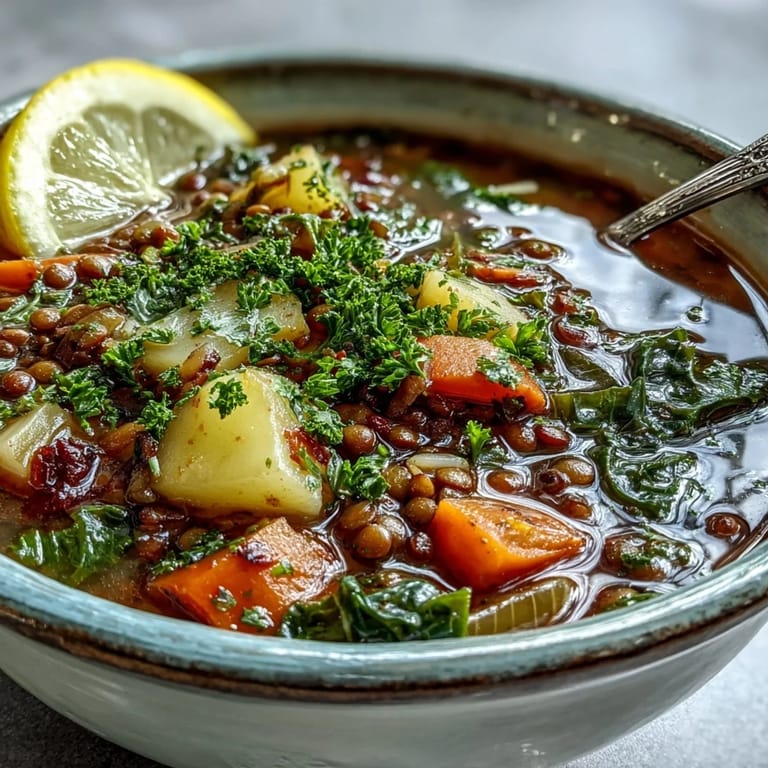
- Ladle it into bowls while it's steaming, scatter fresh parsley on top if you have it, and offer lemon wedges on the side. Let people squeeze a little brightness over the top—this small gesture transforms the whole experience.
 Save
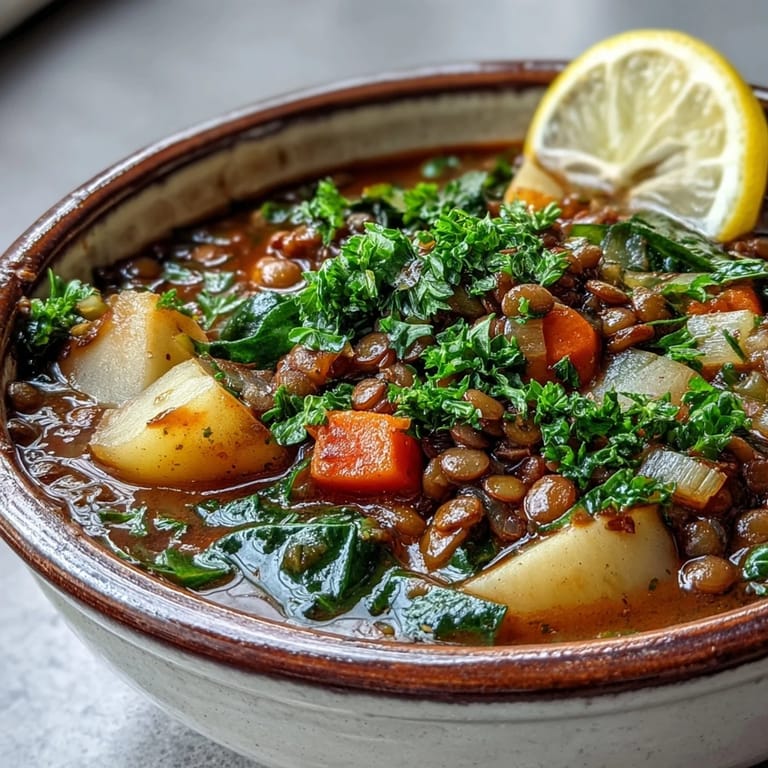
Save Last winter, my neighbor smelled this stew cooking through the shared wall and knocked on the door asking what I was making. We ended up eating bowls together at my kitchen counter, and he told me it reminded him of his grandmother's cooking, which I think is the highest compliment a dish can receive. Food that bridges generations and brings people together is never just food.
The Art of Adjusting Texture
Some days I want this stew thick enough to stand a spoon in, other days I prefer it brothier, more like a rustic soup. The beauty is that you control this entirely—if it's too thick after cooking, add vegetable broth or water a splash at a time until it reaches your preferred consistency. If it's too thin, you can either simmer it uncovered for a few minutes to let some liquid evaporate, or stir in a mixture of equal parts water and cornstarch to thicken it gently. I've learned that respecting the stew's natural inclinations and adjusting for your taste is far better than fighting what's already in the pot.
Why This Stew Improves with Time
There's a phenomenon I've noticed with this recipe where day two tastes noticeably better than day one. The flavors have had time to mingle and deepen, the spices have fully integrated, and somehow the whole thing becomes greater than the sum of its parts. This makes it an ideal dish for meal prep or for cooking when you have the energy and eating from it through the week when you don't.
Variations and Personal Touches
Once you've made this stew a few times, you understand its skeleton well enough to improvise. Some additions that have worked beautifully for me include a splash of balsamic vinegar stirred in at the very end for an unexpected depth, or swapping the regular potato for sweet potato when I want something slightly sweeter and more golden. I've even added a handful of mushrooms that I sauté separately, or a can of white beans alongside the lentils for extra heartiness. The stew is forgiving and generous—it welcomes your creativity while staying true to its essential character.
- A pinch of ground coriander adds an almost citrusy note that feels refreshing rather than heavy.
- Serve it over grains like farro or barley for a completely different eating experience than bread.
- Leftovers freeze beautifully for up to three months, so make a double batch and thank your future self.
 Save
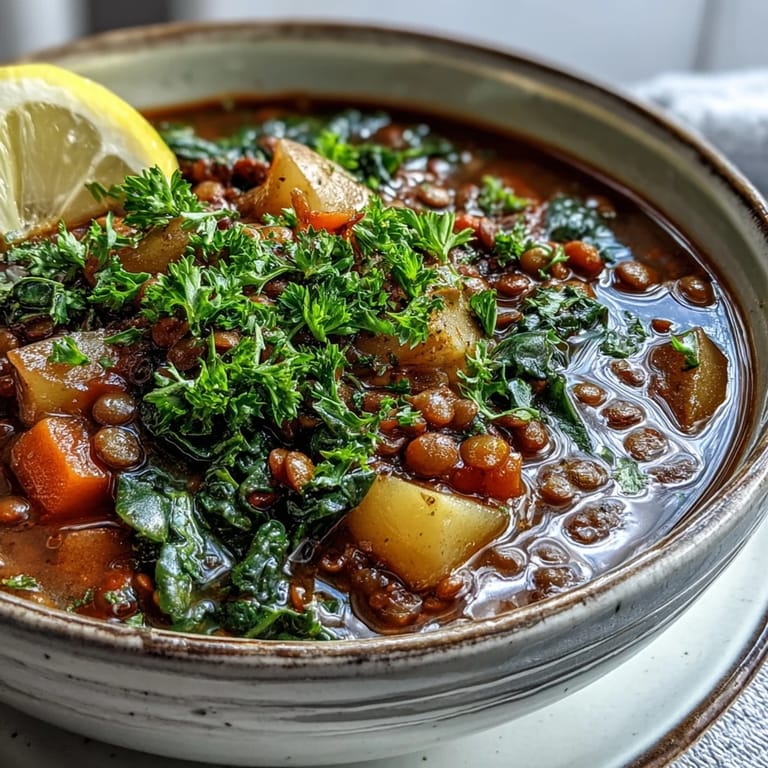
Save This stew has become my answer to so many kitchen moments—when I need comfort, when I'm cooking for people I care about, when I want something nourishing without pretense. It asks nothing extravagant of you and gives back generously in return.
Recipe FAQ
- → Can I use red lentils instead of brown or green lentils?
Red lentils cook much faster and break down more easily, creating a thicker, creamier consistency. If using red lentils, reduce cooking time to 15-20 minutes and expect a more porridge-like texture rather than distinct lentils in broth.
- → How can I make this stew thicker or thinner?
For a thicker stew, simmer uncovered for the last 10 minutes to allow liquid to evaporate, or mash some of the lentils and potatoes against the pot. For a thinner consistency, add extra vegetable broth or water until you reach your desired texture.
- → Can I prepare this stew in advance?
Absolutely! This stew tastes even better the next day as flavors meld together. Store in an airtight container in the refrigerator for up to 5 days, or freeze for up to 3 months. The lentils may absorb liquid during storage, so add broth when reheating.
- → What vegetables can I substitute or add?
This stew is very versatile. Try adding zucchini, sweet potato, butternut squash, or mushrooms. You can also use chard or collard greens instead of spinach or kale. Just maintain similar cooking times for tender vegetables.
- → Do I need to soak the lentils before cooking?
No, brown and green lentils do not require soaking. Simply rinse them thoroughly to remove any debris. Unlike beans, lentils cook relatively quickly without pre-soaking, making this a convenient weeknight meal.
- → How do I add more protein to this dish?
The lentils already provide 16g of protein per serving, but you can boost it further by stirring in cooked chickpeas, white beans, or cubed tofu during the last 10 minutes of cooking. Serving with whole grain bread also adds complementary proteins.