 Save
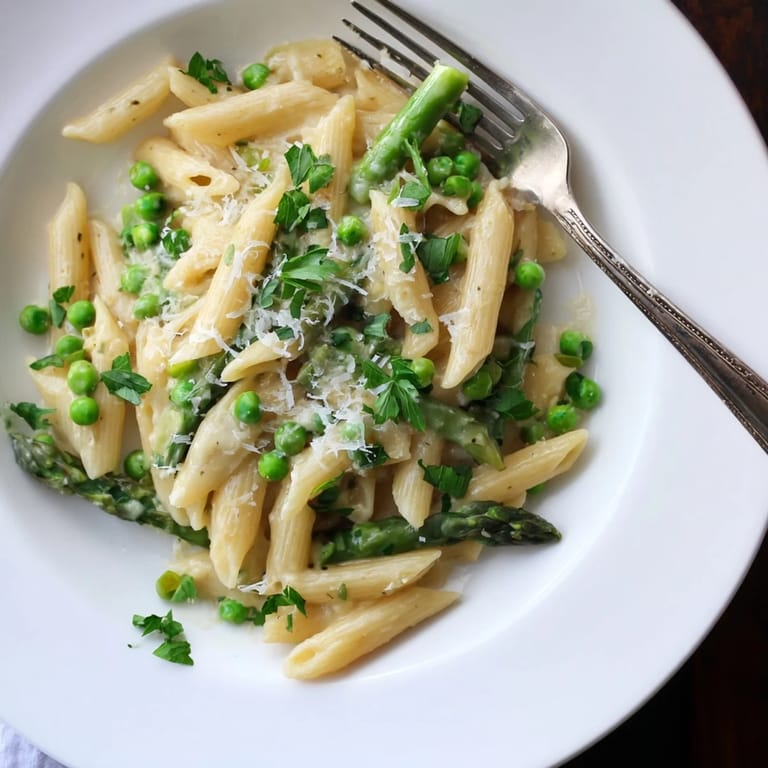
Save The first time I made this pasta, I was trying to use up a CSA box that was threatening to overflow my crisper drawer. Snow was still melting outside, but somehow those bright green vegetables made my kitchen feel like spring had already arrived. My roommate wandered in midway through cooking and said it smelled like a restaurant, which I took as the highest possible compliment. We ate it standing at the counter because neither of us could wait to sit down properly.
Last spring, I made this for my mother who claims to not like creamy pasta sauces. She scraped her plate clean and asked for the recipe before shed even finished her last bite. Something about the lemon cutting through the cream makes it feel lighter than it really is, and the vegetables stay crisp enough that you never forget youre eating something fresh. Now its the first thing I make when I need to convince someone that spring produce deserves more attention.
Ingredients
- 350 g (12 oz) penne pasta: The ridges catch the sauce beautifully, and the short shape lets you get all three vegetables in every forkful
- 200 g (7 oz) asparagus: Cutting them into bite-sized pieces means they cook evenly and you dont have to chase them around your bowl
- 150 g (1 cup) fresh or frozen peas: Frozen work perfectly here, but fresh peas make it feel like a真正的 celebration of the season
- 150 g (1 cup) green beans: Trim them carefully so theyre roughly the same size as your asparagus for even cooking
- 2 tbsp olive oil: Use a good one here since the base of your sauce depends on its flavor
- 3 cloves garlic: Freshly minced releases more oils than pre-minced, and you can really taste the difference
- 60 ml (1/4 cup) vegetable broth: Creates steam that helps the vegetables cook without oil
- 120 ml (1/2 cup) heavy cream: Half-and-half works if you want something lighter, but cream gives that restaurant-quality finish
- 60 g (2/3 cup) freshly grated Parmesan: Buy a wedge and grate it yourself—the pre-grated stuff never melts quite right
- 1/2 tsp freshly ground black pepper: The sharpness balances the cream beautifully
- 1/4 tsp salt: Start here and adjust at the end since Parmesan is naturally salty
- Zest of 1 lemon: Use a microplane if you have one, and avoid the white pith underneath
- 1 tbsp fresh lemon juice: This brightens the whole dish and makes it feel lighter than a typical cream sauce
Tired of Takeout? 🥡
Get 10 meals you can make faster than delivery arrives. Seriously.
One email. No spam. Unsubscribe anytime.
Instructions
- Cook the pasta to perfection:
- Bring a large pot of generously salted water to a rolling boil, add your penne, and cook until al dente—usually a minute less than the package says. Before you drain, scoop out 120 ml of pasta water and set it aside. Drain the pasta and set it aside too.
- Build your flavor foundation:
- Heat the olive oil in your largest skillet over medium heat. Add the minced garlic and let it sizzle for just one minute—any longer and it might turn bitter. Watch for that moment when the kitchen starts smelling like an Italian restaurant.
- Cook the vegetables until bright green:
- Add the asparagus, green beans, and peas to the skillet. Sauté them for 3 to 4 minutes, stirring occasionally. You want them tender but still snappy, with that vibrant green color that screams spring.
- Create the base of your sauce:
- Pour in the vegetable broth and let everything bubble together for 2 minutes. The liquid will reduce slightly and the vegetables will absorb some of that flavor.
- Make it creamy:
- Reduce the heat to low and stir in the heavy cream and 60 g of grated Parmesan. Keep stirring until the cheese melts completely and you have a silky smooth sauce that coats the back of a spoon.
- Bring everything together:
- Add the cooked penne to the skillet and toss it gently until every piece is coated in sauce. If it looks too thick, splash in some of that reserved pasta water—a little at a time—until you reach the perfect consistency.
- Season and brighten:
- Stir in the black pepper, salt, lemon zest, and lemon juice. Taste and adjust the seasoning if needed. The sauce should taste rich but still bright from the lemon.
- Finish and serve:
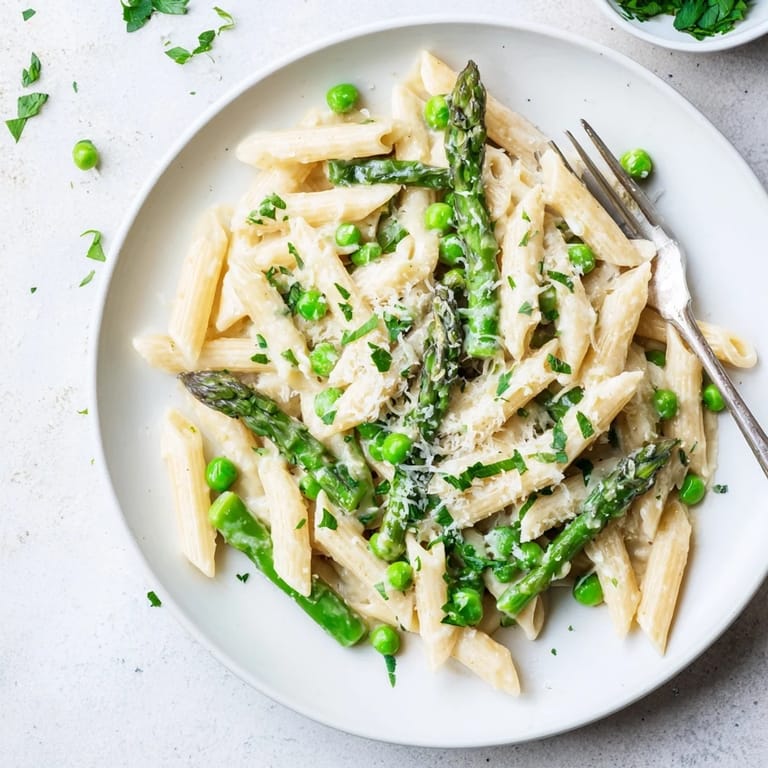
- Plate the pasta immediately while the sauce is still glossy and hot. Sprinkle generously with extra Parmesan and scatter fresh herbs on top. Serve with extra lemon wedges at the table.
 Save
Save This became my go-to dinner for those nights when I want something comforting but not heavy. Last week I made it after a long day at work and found myself actually enjoying the cooking process instead of treating it as another task. Something about chopping all those green vegetables feels therapeutic, and watching the sauce come together never gets old.
Making It Your Own
Sometimes I add a handful of baby spinach right at the end, letting it wilt briefly in the hot pasta. A pinch of red pepper flakes gives it a gentle warmth that works especially well on chilly spring evenings. When asparagus isnt in season, broccoli florets work beautifully and keep that same green-on-green aesthetic.
What I Learned About Timing
After making this recipe countless times, I realized that having everything prepped before I start cooking makes all the difference. The garlic can go from fragrant to burned in seconds, and you want to add the vegetables to the pan as soon as the oil is ready. Now I chop everything while the pasta water heats up, and the whole process feels almost effortless.
Serving Suggestions
A crisp white wine cuts through the cream without overwhelming the delicate vegetables. A simple green salad with vinaigrette on the side keeps the meal feeling fresh. For something heartier, serve it alongside roasted chicken or fish.
- Save a little extra Parmesan for the table—people always ask for more
- Leftovers reheat surprisingly well with a splash of cream or broth
- Double the vegetables if you want an even lighter pasta-to-veg ratio
 Save
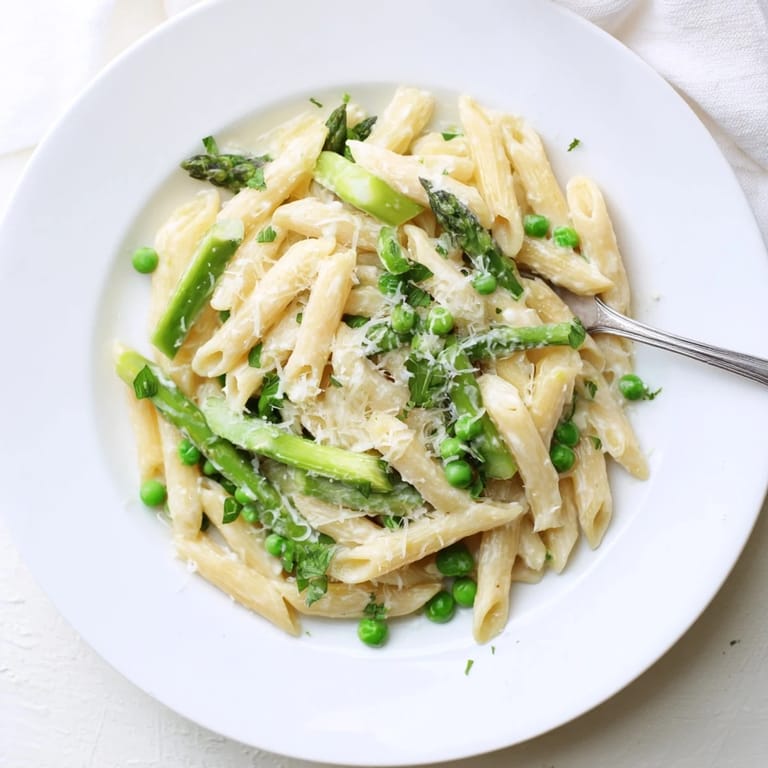
Save This pasta is what spring tastes like in my kitchen, and I hope it becomes a seasonal tradition in yours too.
Recipe FAQ
- → Can I use different vegetables?
Yes, you can substitute asparagus, peas, and green beans with other spring vegetables like artichoke hearts, sugar snap peas, or broccoli florets. Adjust cooking times to ensure vegetables remain tender-crisp.
- → How do I prevent the sauce from separating?
Keep the heat low when adding the cream and Parmesan. Stir constantly until the cheese melts completely. Adding reserved pasta water helps stabilize the sauce and creates a silky texture.
- → Can I make this dairy-free?
Substitute heavy cream with full-fat coconut cream or cashew cream. Use vegan Parmesan or nutritional yeast instead of dairy Parmesan. The flavor profile will change slightly but remains delicious.
- → Can I prepare this ahead?
Vegetables can be trimmed and cut up to a day in advance. The sauce is best made fresh, but you can combine ingredients just before serving. If reheating, add a splash of cream or broth to loosen the sauce.
- → What other pasta shapes work well?
Farfalle, fusilli, rotini, or gemelli all work beautifully. Short pasta with ridges or curves holds the creamy sauce well and catches the vegetables. Avoid long strands like spaghetti or linguine.
- → How do I store leftovers?
Store in an airtight container in the refrigerator for up to 3 days. Reheat gently with a splash of cream or pasta water to restore the sauce's consistency. The pasta may absorb more sauce as it sits.