 Save
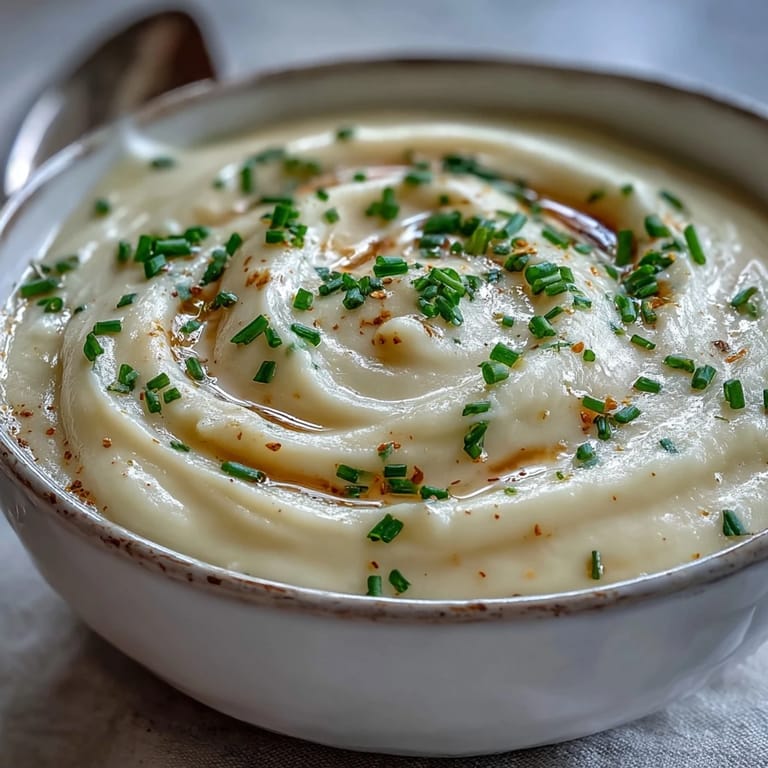
Save There's something about celery root that catches people off guard—it's earthy and refined all at once, nothing like the fibrous stalks most people know. Years ago, a French neighbor invited me for lunch and served this bisque as the opening course, and I remember being struck by how such an humble vegetable could taste so luxurious when treated with care. That afternoon taught me that elegance doesn't require exotic ingredients, just technique and patience. Now whenever I make this soup, I'm transported back to that quiet kitchen, the windows steamed over, the smell of butter and leek filling the air.
I made this for my sister's book club once, and what stuck with me wasn't the compliments—though there were plenty—but the moment afterward when someone asked for the recipe and admitted she'd never tried celery root before. We spent twenty minutes talking about where to find it and how to peel it, and I realized this soup had become a conversation starter. Food has a way of doing that when it's made with genuine care.
Ingredients
- Celery root: The star of this show—look for firm, unblemished bulbs without soft spots, and don't be intimidated by peeling it; a sharp knife and steady hand are all you need.
- Yukon Gold potato: These waxy potatoes hold their shape during cooking and add natural creaminess without thinning the bisque.
- Leek: Use only the white and light green parts, sliced into thin half-moons for even cooking and a delicate onion-like sweetness.
- Vegetable broth: Quality matters here since it's the backbone of the soup; homemade is wonderful if you have it, but a good store-bought version works perfectly.
- Whole milk and heavy cream: The combination creates that signature velvety mouthfeel; if using dairy alternatives, choose ones that won't curdle when heated.
- Unsalted butter: Lets you control the salt level and creates a richer base than oil alone, though olive oil works beautifully for a lighter version.
- White pepper: More delicate than black pepper and won't speckle the cream-colored soup, keeping it visually pristine.
Tired of Takeout? 🥡
Get 10 meals you can make faster than delivery arrives. Seriously.
One email. No spam. Unsubscribe anytime.
Instructions
- Build Your Flavor Base:
- Melt butter over medium heat and add your sliced leek, chopped onion, and minced garlic—you want them soft and fragrant but not caramelized, which happens around the 5-minute mark. Listen for the gentle sizzle to settle into a quiet simmer; that's your cue to move forward.
- Introduce the Main Players:
- Add your diced celery root and potato, stirring constantly for about 3 minutes so they get coated in the buttery mixture. The vegetables will begin to soften slightly at the edges, releasing their starches into the pot.
- Let Time Do the Work:
- Pour in the vegetable broth, tuck in the bay leaf, and bring everything to a gentle boil. Cover, reduce heat, and let it simmer for 25 minutes until the celery root is so tender it falls apart with the slightest pressure from a spoon.
- Achieve Silky Smoothness:
- Fish out the bay leaf, then use an immersion blender in the pot (or work in batches with a regular blender if that's what you have). Blend until the soup is completely smooth—no grainy texture, no lumps—which takes about 2 minutes of steady blending.
- Marry Cream and Broth:
- Stir in the milk and heavy cream slowly, stirring constantly to incorporate them evenly. Keep the heat low and watch carefully; you want it warm but never boiling, as high heat can cause curdling.
- Season and Serve:
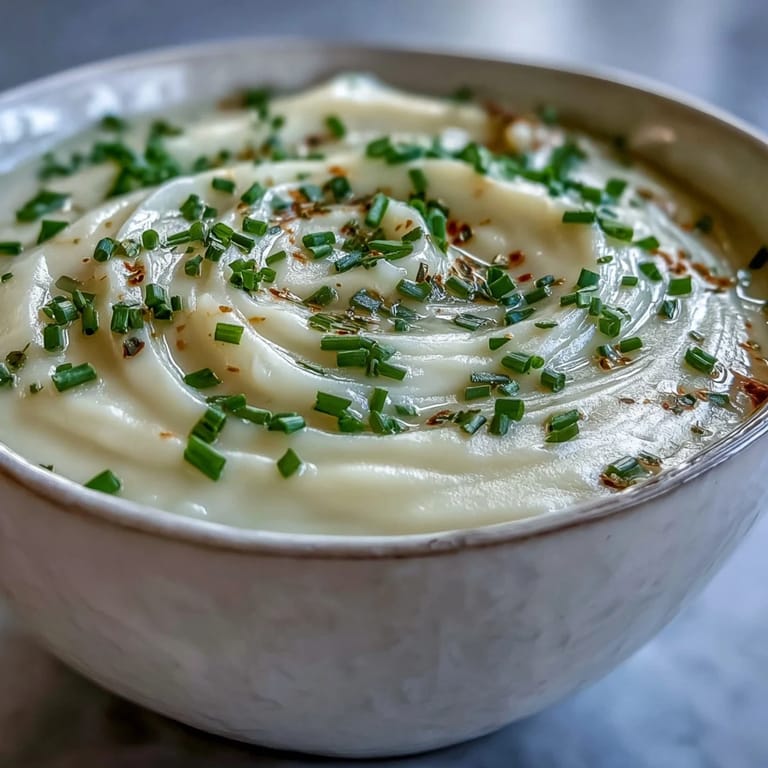
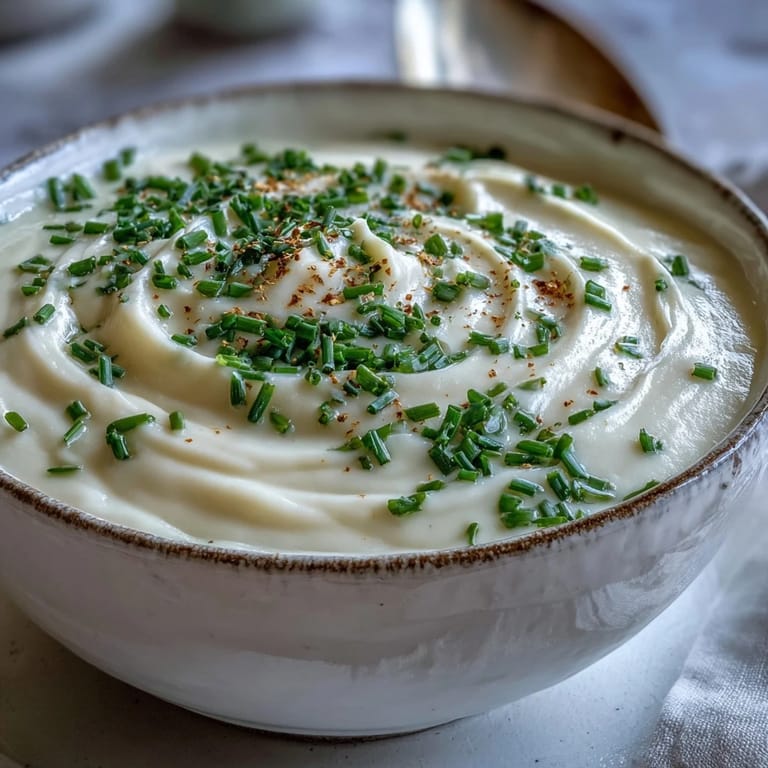
- Taste carefully as you add salt and white pepper, remembering that you can always add more but you can't remove it. Ladle into warm bowls, garnish generously with chives or parsley, and add a final drizzle of cream if the mood strikes.
 Save
Save I learned the true value of this soup during a winter when I was overwhelmed and exhausted, and a friend showed up with a container of it warming in her car. The simplicity of ladling it into a bowl and being fed something so thoughtfully made reminded me that sometimes the most elegant dishes are also the most comforting. That's when I understood why this bisque has stayed in my rotation for so long.
The Celery Root Question
Celery root—also called celeriac—isn't actually the root of a celery plant but rather a specific variety bred for the bulbous base. It has a pale, almost creamy interior that's nothing like the fibrous stalks you might imagine, and it brings an earthiness that's subtle enough not to overwhelm but distinctive enough to make people ask what you've done differently. When shopping, hold it in your palm—it should feel heavy for its size, indicating density and moisture.
Making It Your Own
This bisque is a wonderful canvas for personal touches. I've added a splash of dry white wine after sautéing the vegetables, which brings a bright mineral note that lingers in the background. Some seasons I finish with a whisper of nutmeg or thyme, and once I added a single star anise pod just to see what would happen—it was beautiful but subtle. The foundation is so solid that you can trust your instincts with gentle additions.
Pairing and Serving Ideas
Serve this as the opening course at a dinner party with crusty bread for soaking up every last spoonful, or pair it with a crisp, mineral-driven white wine that echoes the soup's refined character. On quiet nights, I make a double batch and enjoy it with grilled cheese sandwiches, turning elegance into comfort.
- A drizzle of truffle oil adds unexpected luxury if you keep it in your pantry.
- Crispy sage leaves or prosciutto bits provide welcome textural contrast to the silky soup.
- Serve in pre-warmed bowls so the bisque stays at the perfect temperature longer.
 Save
Save Every time I make this bisque, I'm reminded that cooking doesn't have to be complicated to be extraordinary. This one simple soup has taught me more about flavor, texture, and care than a hundred flashier recipes ever could.
Recipe FAQ
- → Can I make this bisque dairy-free?
Yes, simply substitute the butter with olive oil, and use unsweetened plant-based milk and non-dairy cream. The texture and flavor remain beautifully rich and creamy.
- → What does celery root taste like in this soup?
Celery root offers a subtle, earthy flavor with mild celery notes. When blended into a bisque, it creates a delicate, sophisticated taste that's less pronounced than celery stalks.
- → Can I prepare this bisque in advance?
Absolutely. This soup stores well in the refrigerator for up to 3 days. Reheat gently over low heat, stirring occasionally. You may need to add a splash of broth or milk to adjust consistency.
- → What can I serve alongside this bisque?
This elegant soup pairs wonderfully with crusty French bread, garlic crostini, or a simple green salad. For wine, choose a crisp, mineral-driven white wine like Chablis or Sancerre.
- → How do I choose a good celery root?
Select firm, heavy celery roots without soft spots. Smaller to medium-sized roots tend to be less woody. The knobby exterior is normal - you'll peel away the tough skin before dicing.
- → Can I freeze this bisque?
Yes, this soup freezes well for up to 2 months. Cool completely before freezing in airtight containers. Thaw overnight in the refrigerator and reheat gently, whisking to restore smooth texture.