 Save
Save There's something about the first warm day of spring that makes you want to blur the line between salad and soup. I was standing in the farmers market, holding a bunch of courgettes still warm from the sun, when the vendor mentioned how quickly they'd turn soft if left sitting. That afternoon, I decided to catch them at their peak by turning them into something silky and bright, something you could eat in a bowl but that still tasted like May outside. The pesto swirl felt like an afterthought until I drizzled it in—suddenly the whole thing transformed into something alive, something worth repeating.
I made this for my mother on a Sunday when she mentioned feeling tired of heavy winter meals. She took one spoonful, closed her eyes, and asked if I'd added something special to the pesto. I hadn't, but somehow the simplicity of fresh vegetables blending into silk felt like enough. We sat at the kitchen table on a gray afternoon and the soup seemed to brighten everything, including her mood.
Ingredients
- Olive oil (2 tbsp): Use a good quality one if you have it—it's going into soup where every drop matters, and the flavor won't get hidden by cream or competing ingredients.
- Onion and garlic: These two do all the foundational work, building flavor before anything else gets a chance to shine.
- Courgettes (3 medium): The star of the show, and the reason you want to use them when they're still firm and pale green; older ones can taste watery and hollow.
- Peas (250 g): Frozen peas are genuinely better than you think here—they're picked and frozen at peak sweetness, so don't feel bad reaching for them.
- Potato (1 medium): This is the quiet contributor that turns everything creamy without any actual cream, a small magic trick worth remembering.
- Vegetable stock (1 liter): The medium everything else swims in, so taste it first and adjust salt accordingly—some stocks are already quite salty.
- Basil pesto (4 tbsp): The final flourish that tastes like the whole point was the pesto all along; homemade hits differently but don't stress if you're using a jar.
- Salt and black pepper: Added at the end because you can always add more but you can't take it back.
Tired of Takeout? 🥡
Get 10 meals you can make faster than delivery arrives. Seriously.
One email. No spam. Unsubscribe anytime.
Instructions
- Start the foundation:
- Heat the olive oil in a large saucepan over medium heat, then add the chopped onion. Let it soften for three to four minutes, stirring now and then until it turns translucent and smells sweet—this is the moment you know it's ready for the next step.
- Add the aromatic note:
- Stir in the minced garlic and cook for just one minute; you want it fragrant, not browned and bitter. That transition from raw garlic smell to cooked garlic smell is your signal to keep moving.
- Build the vegetables:
- Add the diced courgettes and potato to the pan, stirring occasionally as they cook for about five minutes. You're not looking for them to be soft yet, just for them to start releasing their sweetness into the oil.
- Introduce the liquid:
- Pour in the vegetable stock and bring everything to a boil, then lower the heat and let it simmer gently for ten minutes. This is when the kitchen starts smelling like something worth staying for.
- Finish the vegetables:
- Add the peas and simmer for another five minutes until all the vegetables are completely tender when you press them with a spoon. This is the point where nothing is crunchy anymore and everything wants to blend.
- Blend into silk:
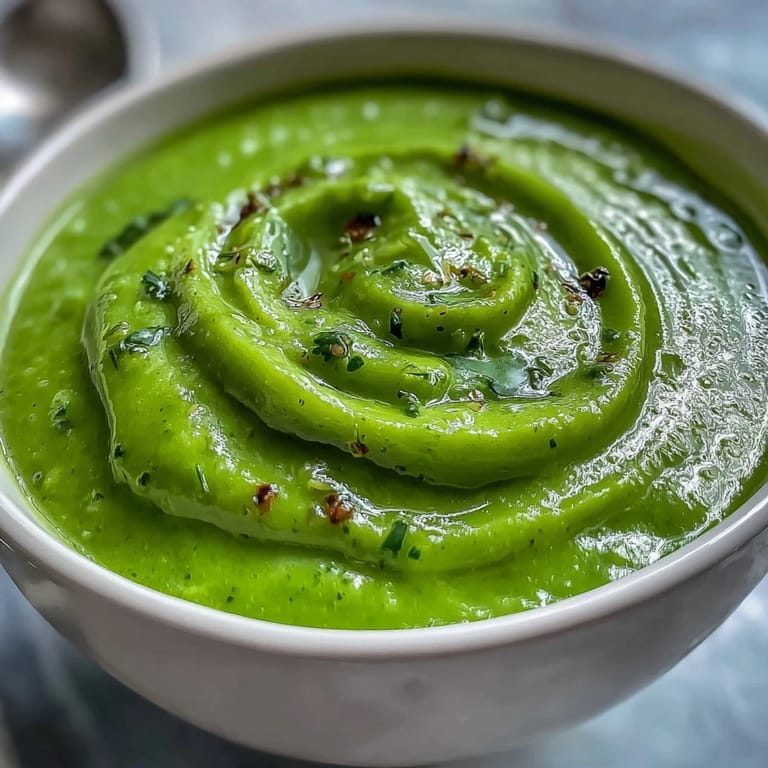
- Remove from heat and use an immersion blender to purée everything until smooth, or transfer to a regular blender in batches. The transformation from chunky to creamy happens almost instantly, like a small kitchen miracle each time.
- Season and reheat:
- Taste it now and add salt and pepper until it tastes like something you want to eat, then warm it gently over low heat if it's cooled down. Don't let it boil again or you'll lose those fresh flavors you worked to capture.
- Serve with presence:
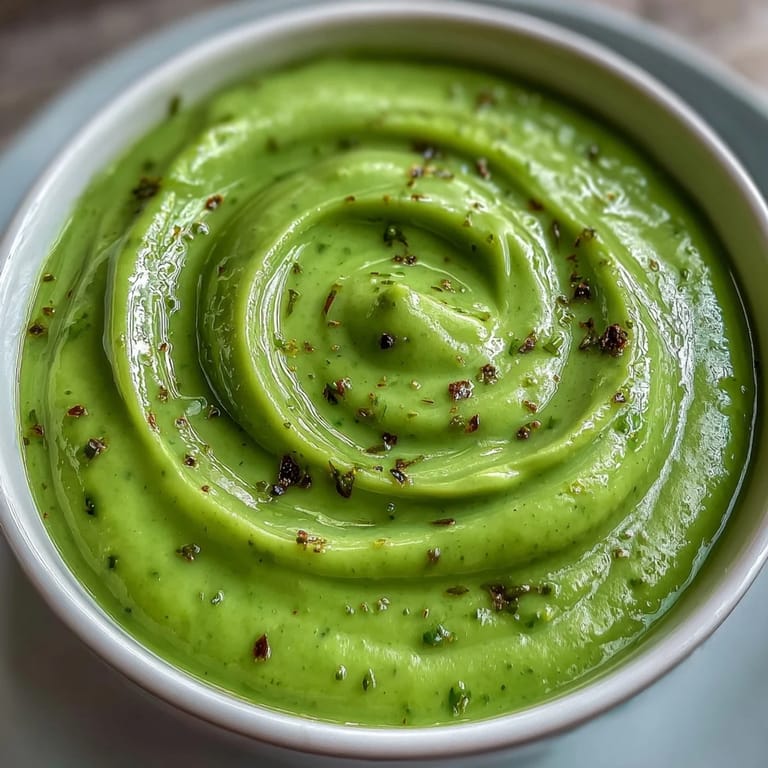
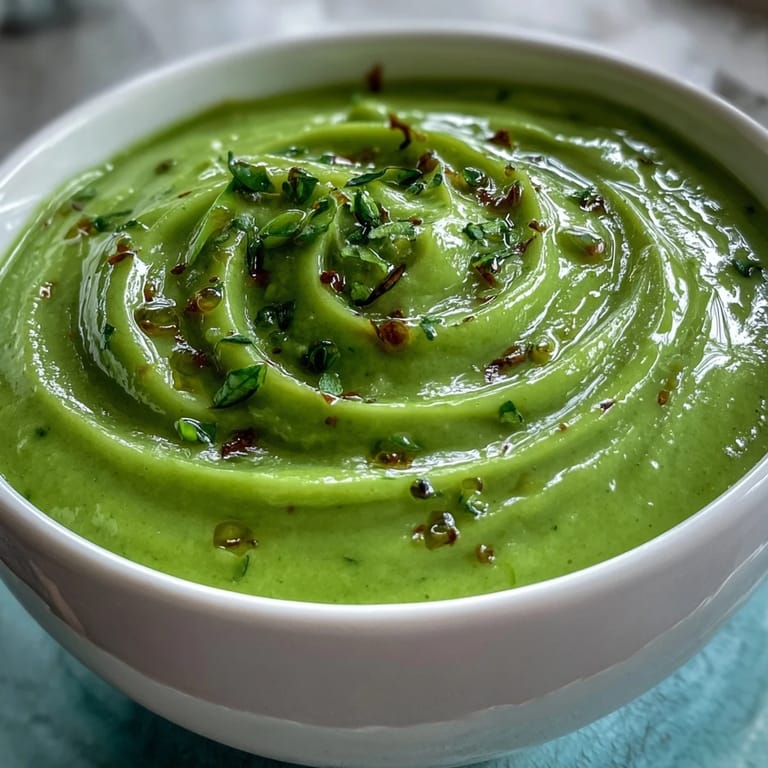
- Ladle into bowls and swirl a tablespoon of pesto into each one, watching it bloom and spread through the green like a secret being told. Top with a small spoonful of crème fraîche or Greek yogurt and a few fresh basil leaves if you have them.
 Save
Save There was an evening when a friend arrived unexpectedly just as I was making this soup, and I added an extra bowl to the pot without thinking twice. We sat in the kitchen talking through everything on our minds, and somehow the warmth of the soup and the brightness of the pesto made the conversation easier. Food has this way of turning into something more when it's shared without ceremony.
Why Fresh Basil Makes All the Difference
The pesto is where this soup either stays nice or becomes something memorable. If you have fresh basil and five minutes, blend it with pine nuts, Parmesan, garlic, and olive oil—the result will taste so much more vibrant than store-bought that you'll wonder why you don't make it more often. Even if you reach for the jar, choose a pesto that still has visible herbs and doesn't look like green paste; the quality shows up immediately in the bowl.
Variations Worth Trying
Once you understand how this soup works, you can swap the courgettes for whatever green vegetables are calling to you. Asparagus in spring, spinach anytime, or even broccoli if you're feeling bold—the potato stays, the stock stays, the method stays, but the soup changes depending on what you're working with. I've found that the pesto swirl works magic on almost any vegetable soup, turning something simple into something that tastes intentional.
Making It Work For Everyone
This soup is naturally vegetarian and gluten-free, which makes it useful when you're cooking for a mixed table and you want everyone to eat the same thing. For vegan guests, swap the pesto for a nut-free and dairy-free version, and skip the crème fraîche—the soup stands up beautifully on its own, especially with a crusty piece of bread for soaking up the last spoonful. The beauty of something this simple is that it bends without breaking.
- Make it ahead and store it in the refrigerator for up to three days, reheating gently and adding the pesto swirl just before serving.
- Freeze it before the pesto step if you want to save it for later—the vegetables hold their flavor better when frozen before the final blending.
- Serve it with whatever bread or salad feels right; this soup is friendly and doesn't demand anything, which is exactly why it works.
 Save
Save This soup has become the thing I make when I want to feel like spring is still possible, no matter what the calendar says. It's proof that simplicity, when done with attention, becomes something worth remembering.
Recipe FAQ
- → Can I make this soup ahead of time?
Yes, prepare up to 2 days in advance. Store in the refrigerator and reheat gently. Add pesto swirl just before serving for best presentation and flavor.
- → Can I freeze this soup?
Absolutely. Cool completely, then freeze in airtight containers for up to 3 months. Thaw overnight in the refrigerator before reheating. Add pesto after reheating.
- → What can I use instead of pesto?
Try swirling in basil oil, olive tapenade, or a dollop of herb-infused yogurt. Fresh herbs like chives or parsley also work beautifully as garnish.
- → How do I make it vegan?
Use dairy-free pesto without Parmesan, and skip the crème fraîche or Greek yogurt. The soup remains creamy and satisfying without these additions.
- → Can I use fresh peas instead of frozen?
Certainly. Fresh shelled peas work wonderfully. Add them during the last 3-4 minutes of simmering to preserve their sweet flavor and bright color.
- → What other vegetables can I add?
Asparagus, spinach, or tender spring greens make excellent additions. Add leafy greens in the last 2 minutes of cooking to wilt them slightly.