 Save
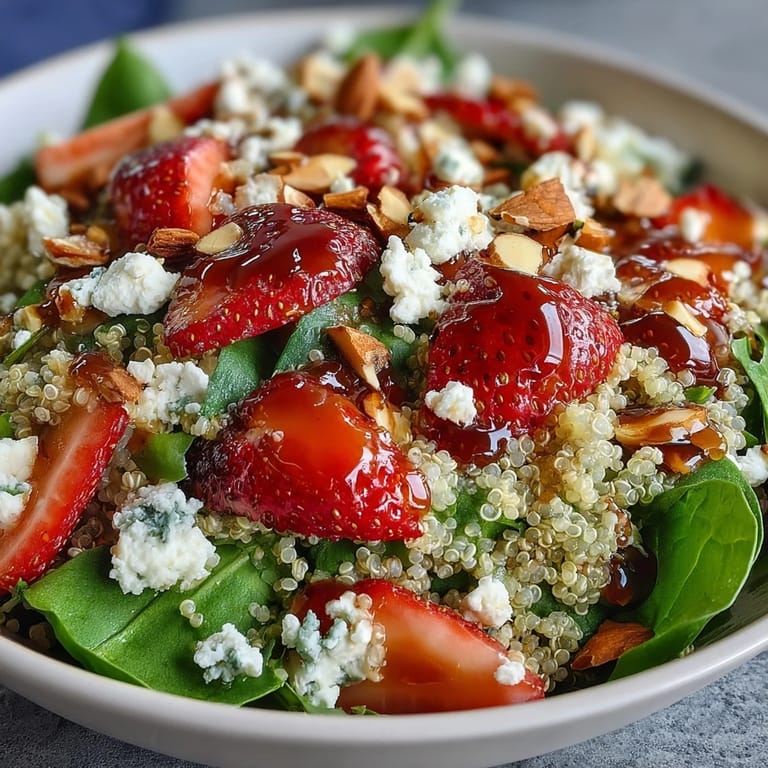
Save There's something about the moment when you bite into a salad and actually enjoy it—when every ingredient seems to have a reason for being there. I stumbled onto this strawberry feta combination while hunting through my farmer's market haul one spring afternoon, holding a basket of the most vibrant berries I'd seen all year and wondering what to do with them besides eat them plain. The tangy feta and earthy quinoa felt like natural companions, and when I drizzled that balsamic dressing over everything, the flavors clicked in a way that surprised me. It became the kind of salad I find myself making every few weeks, not because it's trendy, but because it genuinely satisfies.
I made this for a lunch gathering last summer when a friend mentioned she was trying to eat lighter but didn't want to sacrifice flavor. Watching her go back for seconds and actually asking for the recipe felt like the highest compliment—she said it didn't taste like something you'd make when you're being "good," it tasted like something you'd make because you genuinely wanted it. That's when I knew this salad had staying power.
Ingredients
- Quinoa, uncooked (1 cup): Rinse it thoroughly—this removes the natural coating and prevents that slightly bitter aftertaste that catches people off guard.
- Water (2 cups): Use filtered water if your tap water is heavily chlorinated, as it can subtly affect the grain's flavor.
- Fresh strawberries, hulled and sliced (1½ cups): Pick berries that smell fragrant and are deep red all the way through; pale or white-tipped berries won't have developed their sweetness yet.
- Baby spinach, roughly chopped (2 cups): Don't chop it too fine—rough, uneven pieces hold the dressing better and feel more substantial in your mouth.
- Red onion, thinly sliced (¼ small): The small amount keeps the bite sharp without overwhelming the delicate strawberries.
- Cucumber, diced (½ cup): English cucumbers have fewer seeds, so you'll get more flesh and less watery filling.
- Feta cheese, crumbled (½ cup): Crumble it by hand rather than using pre-crumbled; it holds its shape better and tastes fresher.
- Sliced almonds, toasted (¼ cup, optional): Toasting them yourself—even just a quick 3 minutes in a dry pan—wakes up their natural oils and makes them taste twice as good.
- Extra-virgin olive oil (3 tablespoons): Don't skimp here; the quality of the oil makes a real difference in how the dressing tastes.
- Balsamic vinegar (2 tablespoons): Look for vinegar that's aged at least 8 years for deeper complexity.
- Honey or maple syrup (1 teaspoon): This balances the vinegar's acidity and softens the sharpness slightly.
- Dijon mustard (1 teaspoon): It acts as an emulsifier and adds a subtle depth that most people can't quite identify but definitely taste.
- Salt and black pepper: Taste as you go and adjust—the feta is already salty, so you might need less than you'd expect.
Tired of Takeout? 🥡
Get 10 meals you can make faster than delivery arrives. Seriously.
One email. No spam. Unsubscribe anytime.
Instructions
- Rinse and cook the quinoa:
- Run the quinoa under cold water in a fine mesh strainer until the water runs clear—you'll feel it go from slightly slippery to smooth, which means the coating is gone. Combine it with 2 cups of water in a medium saucepan, bring to a boil, then immediately reduce the heat, cover, and simmer for 12 to 15 minutes until all the water absorbs; when you lift the lid, you should see tiny white sprouts poking out from the grains.
- Let it rest and cool:
- Keep the lid on for 5 more minutes after you turn off the heat—this allows the moisture to finish distributing. Fluff it gently with a fork and spread it on a clean plate to cool to room temperature faster; warm quinoa will wilt your salad.
- Whisk together the dressing:
- In a small bowl, combine the olive oil, balsamic vinegar, honey, and Dijon mustard, then whisk vigorously for about a minute until the mixture becomes glossy and slightly thickened. Season with salt and pepper to taste, keeping in mind that the feta will add saltiness later.
- Assemble the salad:
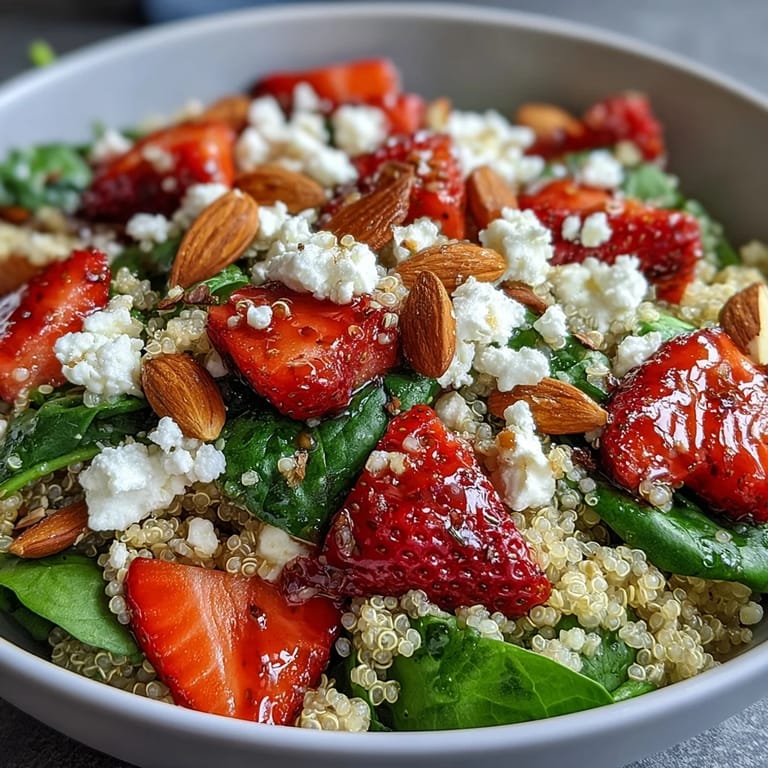
- In a large salad bowl, combine the cooled quinoa, fresh strawberries, spinach, red onion, cucumber, and crumbled feta, tossing everything together gently so you don't crush the berries or cheese. Drizzle the dressing over the top and toss again with a light hand.
- Top and serve:
- Just before serving, sprinkle the toasted almonds over the salad so they stay crispy and crunchy rather than getting soggy from the dressing. Serve immediately while the almonds are still warm if possible.
 Save
Save There was a moment during a busy week when I made a big batch of this salad for meal prep, thinking I'd have easy lunches all week. By day three, I realized the magic of this dish is that it's meant to be eaten fresh and assembled with intention—not made ahead and forgotten in the fridge. That taught me something valuable about respecting what a recipe is asking for rather than forcing it into my schedule.
Why This Salad Works
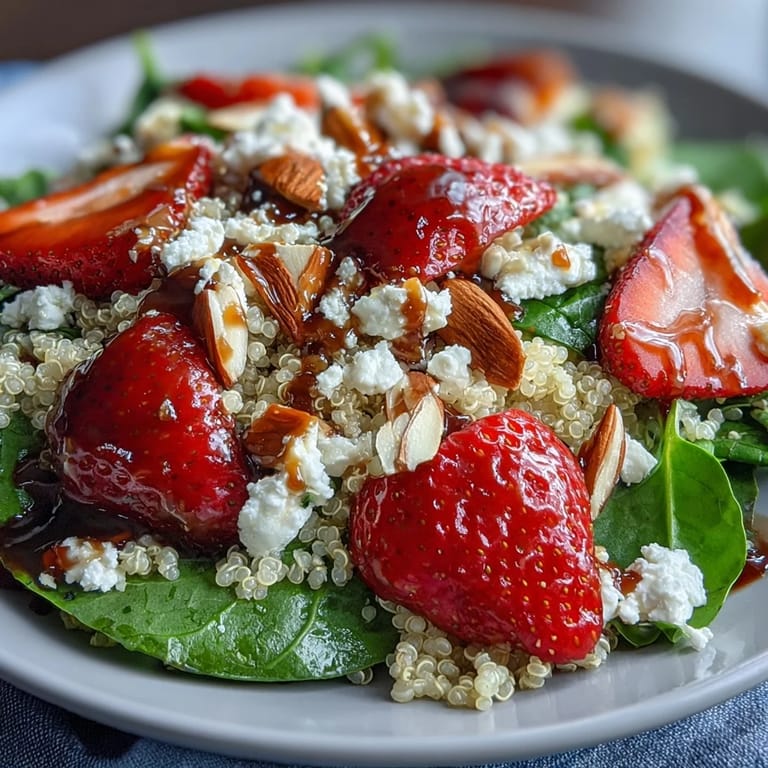
The secret is contrast—not just in flavors but in textures and temperatures. The warm earthiness of quinoa plays beautifully against the bright tartness of balsamic, while feta's creaminess melts slightly from the residual warmth of the grain. Spinach gives you something substantial to chew on, strawberries offer natural sweetness without any sugar you've added yourself, and almonds provide that final crunch that makes your brain register the dish as complete and satisfying. It's a salad that feels intentional because every ingredient has a job.
Making It Your Own
The beautiful thing about this salad is how forgiving it is to customization. I've made it with arugula instead of spinach when I wanted more peppery notes, and it was equally delicious. Grilled chicken, crumbled goat cheese, or even chickpeas can transform it into a complete meal if you're eating it as a main course rather than a side. Some nights I add a handful of toasted pumpkin seeds because they were on my counter, and that swap feels natural, not like I'm breaking a rule.
Serving and Storage Tips
This salad shines brightest when eaten within a few hours of assembly, but you can absolutely prep everything ahead and throw it together when you're ready to eat. If you're making it for a gathering, consider putting the dressing on the side and letting people dress their own portions—some people love it heavily dressed while others prefer a lighter hand. The leftover dressing keeps in a sealed jar in the refrigerator for about a week and works wonderfully on roasted vegetables or drizzled over grilled fish.
- Toast your almonds fresh if possible, or store them in an airtight container so they don't go rancid or stale before you use them.
- If you're making this ahead for lunch, pack the dressing separately and add it just before eating to keep everything crisp.
- Taste the salad before serving and add a pinch more salt if needed—the feta's saltiness varies by brand, so you might need to adjust.
 Save
Save This salad has become my go-to when I want to feel nourished without any fuss, and it's the kind of dish that reminds you that eating well doesn't have to be complicated. Make it once and you'll understand why it keeps showing up on my table.
Recipe FAQ
- → How do I cook the quinoa perfectly?
Rinse quinoa thoroughly before cooking. Boil with water, then simmer covered for about 12-15 minutes until water is absorbed. Let it stand covered to fluff before cooling.
- → Can I substitute feta cheese?
Yes, vegan feta alternatives work well, or you can omit cheese for a dairy-free option without compromising flavor.
- → What dressing is used in this dish?
A simple balsamic vinaigrette made from olive oil, balsamic vinegar, honey or maple syrup, and Dijon mustard balances sweetness and tanginess.
- → Are there nut-free variations?
Absolutely, omit toasted almonds or replace with seeds like pumpkin for a crunchy texture without nuts.
- → Can other greens be used instead of spinach?
Baby arugula or mixed salad greens can replace spinach to vary the flavor profile while keeping it fresh.