 Save
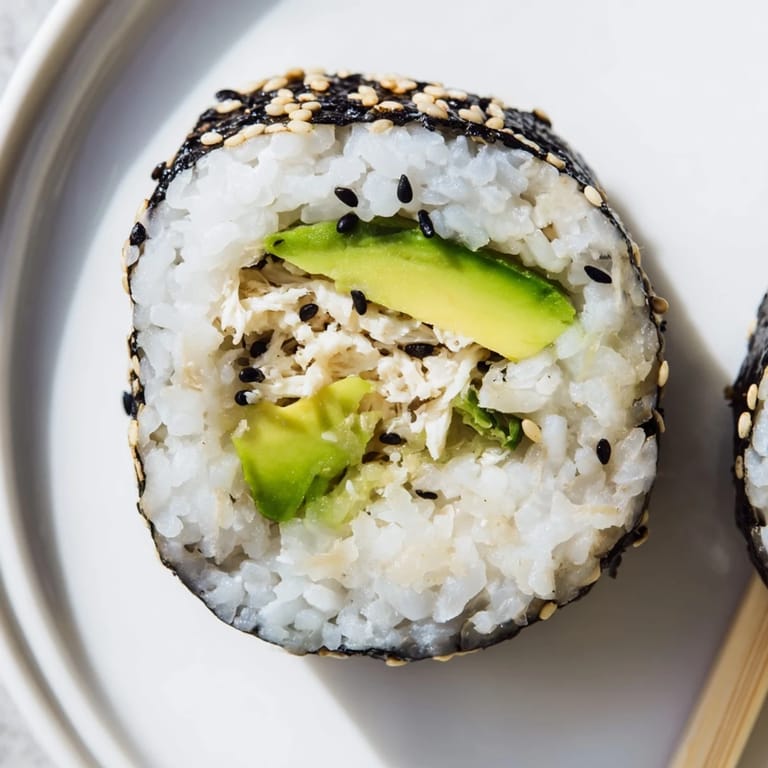
Save The first time I attempted making California rolls at home, I ended up with rice stuck to my elbows, nori torn into confetti, and a very patient husband laughing while trying to help me roll the ingredients back inside. We ordered takeout that night, but something about the process stuck with me those perfectly cut restaurant rolls didn't seem like magic anymore, just practice. Three attempts later, my rolls finally held their shape, and watching friends light up when I served homemade sushi at a dinner party made all the rice covered counters worth it.
My friend Sarah hosted a sushi rolling party last winter, and we crowded around her tiny kitchen island, wine glasses in hand, taking turns with the bamboo mats. Someone's roll inevitably fell apart every few minutes, and the room filled with laughter more than conversation. By the end of the night, wed made dozens of imperfect but delicious rolls, and I realized that making sushi is meant to be shared, not perfected in solitude.
Ingredients
- Sushi rice: Short grain rice is non negotiable here it releases just the right amount of starch to hold everything together while staying fluffy
- Rice vinegar mixture: This seasoning is what transforms plain cooked rice into the glossy, slightly tangy foundation that makes sushi taste like sushi
- Crab or surimi: Imitation crab works beautifully here and shreds easily into the perfect texture for rolling
- Avocado: Pick one that gives slightly to pressure but isn't mushy, and youll get those gorgeous green strips that hold their shape inside the roll
- Cucumber: English or Persian cucumbers work best since they have fewer seeds and stay crisp without making the roll soggy
- Nori sheets: Toast these briefly over a gas flame for extra flavor and a better texture that wont tear as easily
- Sesame seeds: Toasting them in a dry pan for just two minutes deepens their nutty flavor dramatically
Tired of Takeout? 🥡
Get 10 meals you can make faster than delivery arrives. Seriously.
One email. No spam. Unsubscribe anytime.
Instructions
- Prepare the rice foundation:
- Rinse the rice until the water runs clear about four or five changes then combine with water in a saucepan and bring to a boil before covering and simmering gently for exactly fifteen minutes. Let it rest off the heat, still covered, for another ten minutes so every grain finishes cooking evenly.
- Season and cool the rice:
- Mix the rice vinegar, sugar, and salt in a small bowl until completely dissolved, then gently fold this mixture through the hot rice using a cutting motion to avoid mashing the grains. Spread the seasoned rice in a wide shallow bowl or baking sheet to cool to room temperature, fanning it slightly if you have the patience.
- Set up your rolling station:
- Cover a bamboo sushi mat with plastic wrap so the rice doesnt stick to it, then lay a sheet of nori shiny side down on the wrapped mat. Keep a small bowl of water nearby for wetting your hands this is the secret weapon that keeps rice from sticking to everything.
- Spread the rice layer:
- Dip your hands in water and shake off the excess, then spread about three quarters of a cup of rice evenly over the nori, leaving a two centimeter border at the top edge. Sprinkle toasted sesame seeds over the rice for that restaurant finish and extra crunch.
- Flip and fill the roll:
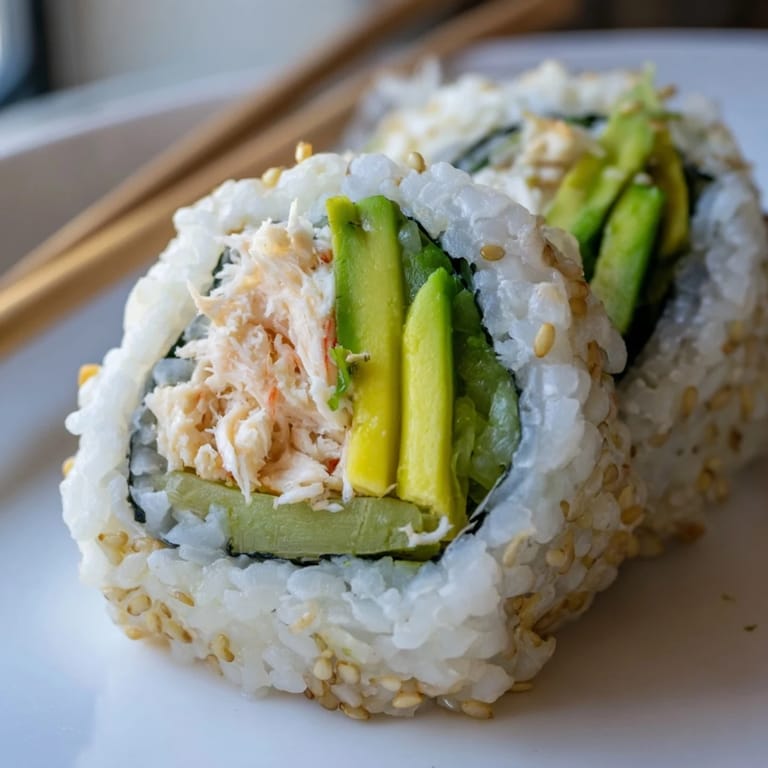
- Carefully flip the entire sheet so the rice faces down on your mat, then arrange the crab, avocado strips, and cucumber in a neat line along the bottom edge of the nori. Add a thin line of mayonnaise across the filling if you want that creamy element that ties everything together.
- Roll and seal:
- Lift the mat edge closest to you and roll forward, using gentle but firm pressure to shape the roll as you go, just like rolling a sleeping bag. When you reach the exposed nori border, dab it with a little water and complete the roll so it seals itself shut.
- Clean slice and repeat:
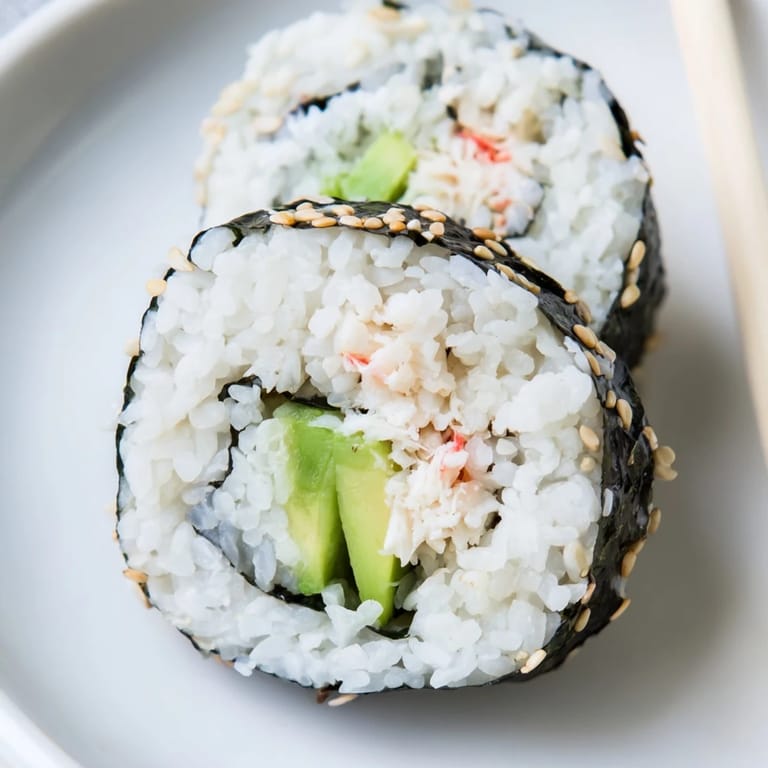
- Use your sharpest knife, dipping it in water between cuts, to slice each roll into six even pieces. Wipe the knife clean after every few slices for the prettiest results, then repeat with the remaining ingredients until you have four beautiful rolls ready to serve.
 Save
Save Last summer, my niece watched me make these and immediately demanded her own rolling mat and rice paddle for her birthday. Now she texts me photos of her creations, sometimes with the rice on the outside, sometimes with experimental fillings like mango or spicy tuna, and every picture makes me smile at how one imperfect cooking attempt turned into someone elses new passion.
Making Ahead
You can prepare the sushi rice up to four hours ahead and keep it covered with a damp cloth at room temperature. The fillings can be prepped earlier in the day and stored separately in the refrigerator, but rolls should be assembled just before serving for the best texture.
Perfecting Your Technique
The most common mistake is pressing too hard when rolling, which compresses the rice into a dense layer instead of keeping it light. Gentle, even pressure creates that airy texture you get in good sushi restaurants, and your knife will thank you when it's time to slice.
Serving Suggestions
Arrange your sliced rolls on a long platter in alternating directions for visual interest, and serve with small dipping bowls of soy sauce mixed with a tiny amount of wasabi.
- Pair with cold sake or a crisp dry white wine like pinot grigio
- Add a small bowl of edamame for an easy appetizer while you roll
- Offer chopsticks but provide forks for anyone struggling with their first sushi experience
 Save
Save There's something deeply satisfying about making food that looks impressive but comes together with just a little practice and patience. Every time I set out a platter of these rolls, I remember that chaotic first attempt and smile at how far a bit of persistence goes.
Recipe FAQ
- → What makes a California roll different from traditional maki?
The California roll features an inside-out presentation where rice coats the exterior rather than being tucked inside the nori. This uramaki style was developed in North America to appeal to diners unfamiliar with seaweed's appearance, while the combination of crab and avocado creates the signature flavor profile that defines this Japanese-American creation.
- → Can I use real crab meat instead of imitation crab?
Absolutely—fresh or pasteurized lump crab meat provides superior texture and flavor compared to surimi. However, imitation crab remains traditional for this roll and offers a budget-friendly alternative that still delivers the characteristic sweetness and flaky texture. If using real crab, simply shred it into pieces similar to the shredded surimi format.
- → Why is my sushi rice falling apart when I roll?
Rice falling apart typically indicates it's either too dry or hasn't cooled sufficiently. Ensure your rice reaches room temperature before rolling—hot rice becomes gummy and difficult to work with. The vinegar mixture should be thoroughly incorporated while the rice is still warm, and keeping your hands dampened with cold water prevents sticking. Proper moisture balance is key for rolls that hold their shape beautifully.
- → How do I prevent the nori from tearing during assembly?
Nori tears most often when it becomes damp from overly wet hands or humid conditions. Work quickly once the nori sheet is placed on your mat, and lightly moisten your fingers rather than soaking them. The nori should remain relatively crisp throughout assembly. If you struggle with the inside-out technique, starting with traditional nori-on-the-outside rolls can help you master the basics before progressing to the more advanced uramaki style.
- → What's the best way to slice California rolls cleanly?
A sharp, damp knife is essential for clean slices—wipe the blade with a damp cloth between every cut to remove sticky rice residue. Use a gentle sawing motion rather than pressing down hard, which can crush the delicate fillings. For the cleanest presentation, slice rolls immediately after assembly while the nori retains slight crispness. Some chefs also wrap their rolls in plastic wrap briefly before slicing to help maintain perfect circular shapes.
- → How long will California rolls stay fresh?
California rolls are best enjoyed immediately after preparation when the rice is at ideal texture and the nori retains slight crispness. If storing, wrap tightly in plastic and refrigerate for up to 24 hours, though the rice will harden and nori will become chewy. For optimal results, prepare ingredients ahead but assemble the rolls shortly before serving. The avocado filling may oxidize slightly—tossing strips with a little lemon juice helps maintain color.